Key Takeaways
- Commercial carpet cleaning cost in 2026 is priced per square foot: about $0.15–$0.50/sq ft for hot water extraction and $0.06–$0.25/sq ft for encapsulation or low-moisture interim cleaning.
- Office carpet typically runs $0.18–$0.38/sq ft by soil level; retail, hospitality, and medical spaces run higher.
- Most providers charge a minimum of $200–$300 per visit, so very small suites pay the minimum, not the square-foot rate.
- A 5,000 sq ft office deep clean usually lands around $750–$2,500; a 10,000 sq ft office around $1,500–$5,000.
- The lowest total cost comes from a maintenance program (frequent encapsulation plus periodic extraction), which is far cheaper than replacing carpet early at $8–$15/sq ft installed.
What Commercial Carpet Cleaning Costs in 2026
Unlike residential work, which is usually quoted per room, commercial carpet cleaning is priced per square foot of measured carpet. That keeps large open floor plans fair and predictable. The two variables that move the number most are the method (deep extraction versus interim low-moisture) and the soil level in each zone.
For 2026, expect hot water extraction to run $0.15–$0.50 per square foot and encapsulation or bonnet cleaning to run $0.06–$0.25 per square foot. On top of that, nearly every commercial provider applies a minimum job charge of $200–$300 to cover travel, equipment, and setup. If your space is under roughly 1,000 square feet, that minimum usually sets your price rather than the square-foot rate.
Beyond method and soil level, several other factors move the final number. Bigger jobs earn volume discounts because crews clean faster in open areas, while heavily partitioned floors with cubicles, cords, and fixed furniture slow the work and push the rate up. Recurring contracts almost always beat one-time bookings on price per visit, since the provider can plan routes, standardize the cleaning process, and spread setup costs across the year. Location matters too: rates in dense metro markets like Chicago tend to sit at the higher end of national ranges because of labor, parking, and access costs.
There is also a difference between a one-time restorative clean and an ongoing maintenance rate. A one-time deep clean of neglected, heavily soiled carpet is priced higher per square foot because it takes more pretreatment, agitation, and passes to recover soil. Carpet that is already on a regular program cleans faster and cheaper, which is a big reason facilities that clean proactively pay less over the life of the floor.
Here is how the main methods compare on price and use case:
| Method | Typical 2026 price | Best for |
|---|---|---|
| Hot water extraction (steam) | $0.15–$0.50 / sq ft | Deep, restorative cleaning of soiled carpet |
| Encapsulation (interim) | $0.06–$0.25 / sq ft | Frequent maintenance in occupied spaces |
| Bonnet / low-moisture | $0.10–$0.20 / sq ft | Quick appearance cleaning, fast drying |
| Minimum job charge | $200–$300 per visit | Small suites and single rooms |
To sanity-check a bid, multiply your carpeted square footage by the rate. A 5,000 sq ft office at $0.15–$0.50/sq ft works out to about $750–$2,500 per deep clean; a 10,000 sq ft office lands near $1,500–$5,000; and a 50,000 sq ft facility cleaned twice a year at roughly $0.25/sq ft budgets around $25,000 per year. Remember that most quotes count only carpeted area, not total floor space, so subtract lobbies, restrooms, and hard-surface zones before you estimate.
If your number lands far below these ranges, ask what is missing. Teaser rates often exclude pretreatment, spot work, furniture moving, or a second pass on traffic lanes, and those exclusions reappear as change orders on the invoice. You can preview likely charges with our online cleaning cost calculator before you call, then use the figure as a baseline when you compare written bids.
Commercial Carpet Cleaning Cost by Facility Type and Soil Level
Not every building pays the same rate. Medical, hospitality, and heavy retail floors carry more risk, tighter appearance standards, and more soil, so they price higher than a lightly used private office. The table below shows typical 2026 per-square-foot ranges for hot water extraction by facility and soil level.
| Facility type | Light soil | Medium soil | Heavy soil |
|---|---|---|---|
| Office / corporate | $0.18–$0.22 | $0.22–$0.28 | $0.28–$0.38 |
| Retail / showroom | $0.20–$0.25 | $0.25–$0.32 | $0.32–$0.42 |
| Hotel / hospitality | $0.22–$0.28 | $0.28–$0.35 | $0.35–$0.48 |
| Apartment / multi-unit | $0.18–$0.24 | $0.24–$0.30 | $0.30–$0.40 |
| Medical / care facility | $0.25–$0.32 | $0.32–$0.42 | Quote only |
The reason facility type changes the price comes down to risk, standards, and soil load. A private corporate office sees predictable weekday foot traffic and forgiving carpet colors, so it cleans quickly and prices near the low end. Retail and showroom floors take constant street soil and must look presentable during business hours, which favors frequent low-moisture cleaning. Hotels combine round-the-clock traffic with premium appearance expectations in lobbies and corridors. Medical and care facilities carry the highest rates because they demand documented sanitation, low-residue chemistry, and careful handling around patients and equipment — which is why many are quoted only after an on-site assessment.
Two things pull the rate down: volume and access. Jobs over 10,000 square feet often drop toward $0.10–$0.18/sq ft for extraction because open areas clean quickly and setup is spread across more square footage. Ground-floor space with easy truck-mount access is cheaper to service than a high floor with long hose runs or elevator-only access, where crews may need portable extractors that clean more slowly. Two things pull it up: soil level and obstacles — heavy grease, ground-in traffic lanes, dense cubicle layouts, and after-hours-only access all add labor time that shows up in the rate.
How Cleaning Methods Change the Price
The method your provider recommends should match your carpet type, your soil level, and how quickly the space needs to reopen. Price and method are tightly linked: deep extraction costs more per square foot but restores heavily used carpet, while interim methods cost less and keep a clean floor looking sharp between deep cleans. The smartest programs use both. The IICRC sets the industry standards that certified technicians follow, and most carpet manufacturers require periodic hot water extraction to keep their warranties valid — so choosing the cheapest method every time can actually void coverage on the floor.
Hot Water Extraction (Steam Cleaning)
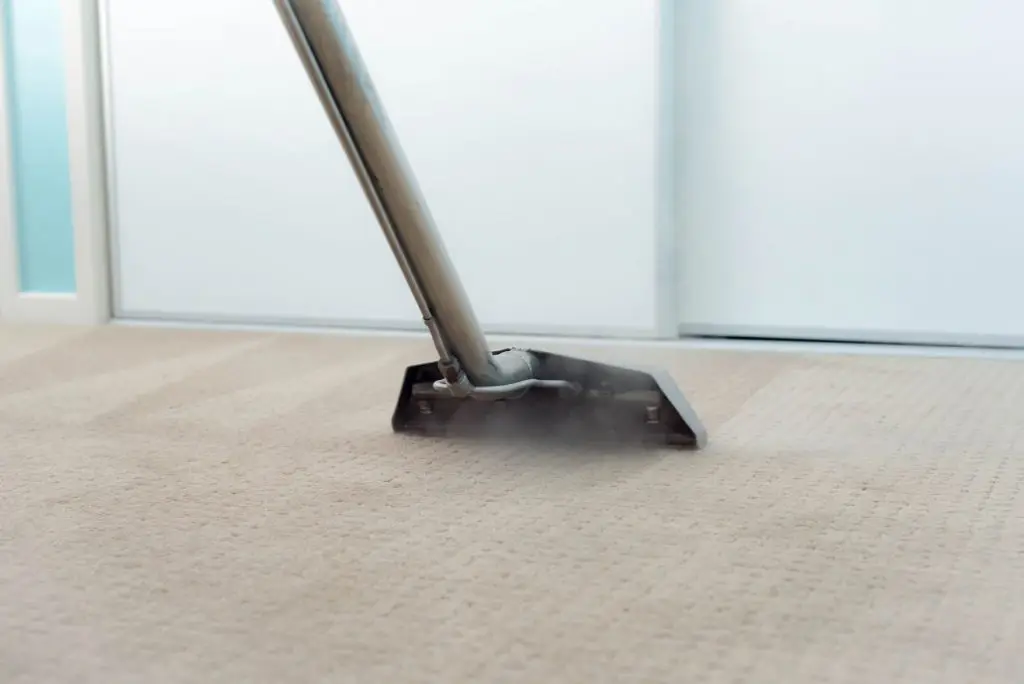
Hot water extraction injects heated cleaning solution under pressure, then immediately vacuums it back out along with suspended soil, oils, and allergens. Truck-mounted systems heat water above 200°F and pull stronger suction than portable units, which is why they leave carpet cleaner and drier. It is the most thorough method and the best choice for heavily soiled carpet, ground-in traffic lanes, grease near break rooms, and post-winter salt tracked in across a Chicago winter. Because it uses more water, drying takes roughly 4–8 hours, so most facilities schedule it after hours or on weekends. Expect to pay $0.15–$0.50 per square foot; the higher end reflects heavy soil, extra pretreatment, or difficult access. This is the deep clean that resets the carpet and the one manufacturers point to for warranty compliance.
Encapsulation (Interim Maintenance)
Encapsulation applies a polymer detergent that is agitated into the pile and then crystallizes around soil particles as it dries. Those brittle crystals release from the fibers and are removed by routine vacuuming over the next day or two. It uses very little moisture, dries in about 1–2 hours, and costs $0.06–$0.25 per square foot, which makes it ideal for occupied offices, retail floors, and corridors that cannot close. Encapsulation keeps appearance high between deep cleans, but on its own it leaves some soil in the base of the carpet, so it complements — rather than replaces — periodic extraction.
Bonnet and Low-Moisture Cleaning
Bonnet cleaning spins an absorbent pad soaked in cleaning solution across the carpet surface to lift topical soil fast. It is the quickest, lowest-cost option ($0.10–$0.20 per square foot) and dries almost immediately, which suits hotels and lobbies that need to look fresh on short notice. The trade-off is depth: it cleans the top of the pile, not the backing, and overuse can leave residue that attracts soil, so it is best used as a light touch-up between real cleans. For guidance on carpet care, fiber types, and appropriate methods, the Carpet and Rug Institute is a helpful reference.
What's Included vs. What Costs Extra
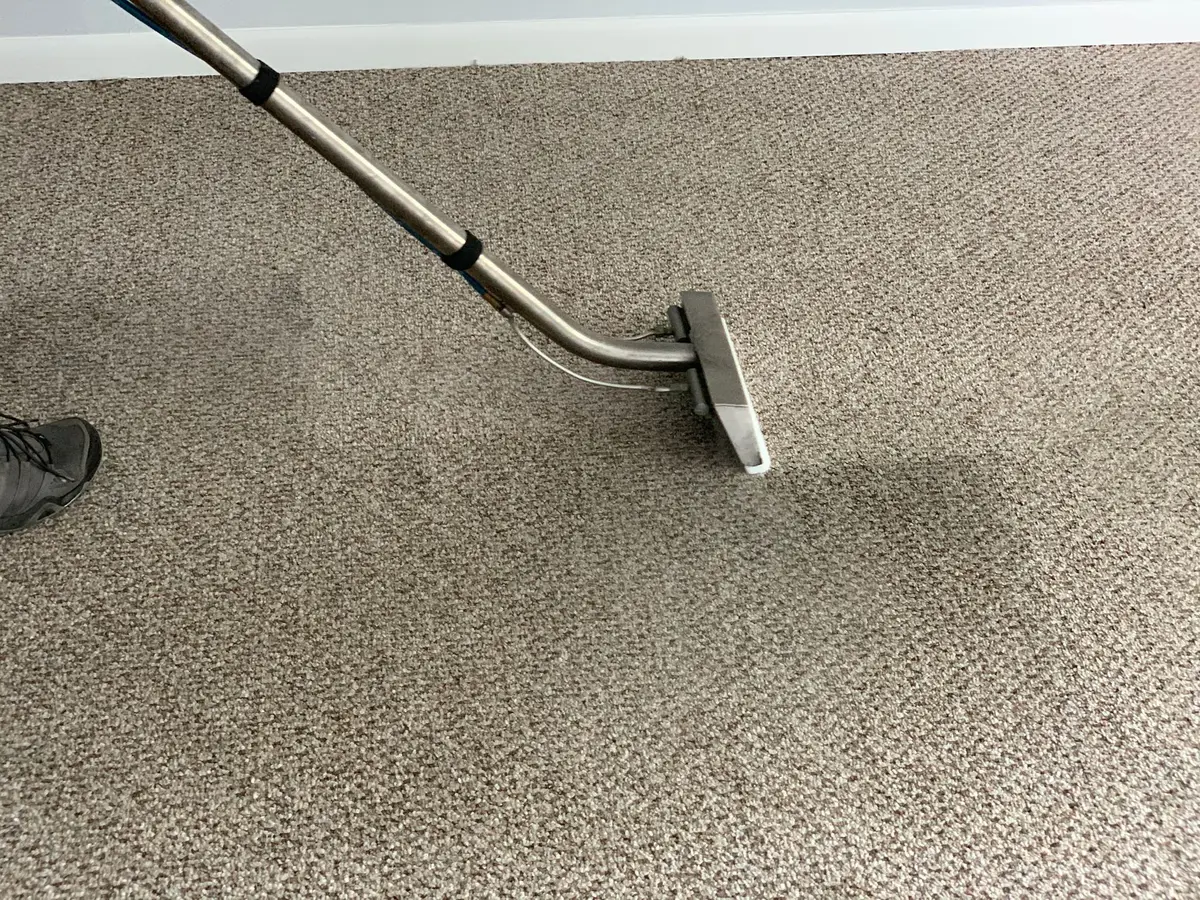
Two bids at the same per-square-foot rate can deliver very different results, because the difference is in the scope. A complete commercial quote should already include a pre-inspection walkthrough of every area, pretreatment of traffic lanes and visible spots, mechanical agitation so the solution reaches the base of the pile, the clean itself, grooming of the fibers, and a post-clean inspection to confirm the work. When those steps are baked in, the price you are quoted is the price you pay.
What often sits outside the base rate is worth confirming in writing so there are no surprises on the invoice:
- Carpet protector (fluorochemical or stain-resist): priced per square foot as an add-on.
- Heavy stain and spot treatment: gum, ink, coffee, or grease beyond routine pretreatment.
- Furniture moving: most crews clean around fixed furniture; moving cubicles or heavy pieces adds labor.
- Odor and pet treatment: enzyme or oxidizing treatment for lingering smells, similar to pet stain and odor removal.
- Interim service visits: encapsulation between deep cleans, usually bundled into a contract rate.
As a rough guide, carpet protector adds roughly $0.05–$0.15 per square foot, spot and stain packages often run $25–$75 per visit, and odor or enzyme treatment is usually priced per affected area. Furniture moving may be included for light items but billed hourly for cubicles, filing systems, or heavy pieces. Ask each bidder to itemize these so you are comparing the same scope, not just the headline rate.
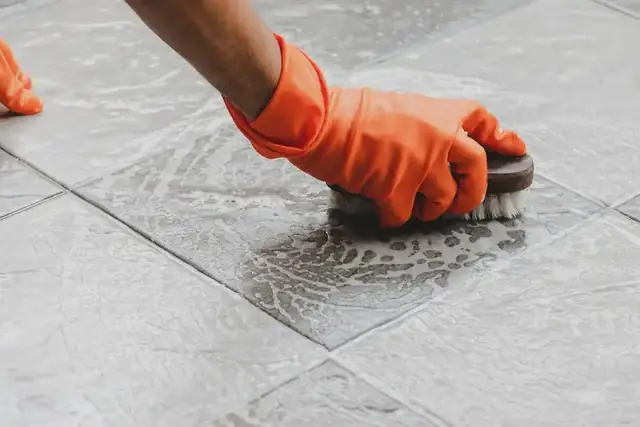
If your building also has hard-surface areas, ask whether the provider bundles tile and grout cleaning for a combined rate, which often lowers the effective cost per visit. Bundling carpet, tile, and upholstery into one recurring contract is one of the simplest ways to cut the effective cost per square foot, because the crew is already on site with equipment running.
How Often to Clean, and Why a Program Costs Less
Frequency drives long-term cost more than the per-visit rate. Commercial carpet does not wear evenly — soil concentrates in the roughly 20% of the floor that carries about 80% of the traffic, so entrances, main corridors, elevator lobbies, and break rooms grind down long before private offices show any wear. Cleaning those zones on a tighter cycle protects the whole floor, because trapped grit acts like sandpaper that permanently dulls and frays the fibers once it is ground in. In Chicago that pressure spikes in winter and early spring, when salt, slush, and mud ride in on shoes and settle into entryway carpet.

The goal of a program is appearance-level maintenance: clean often enough that the carpet never visibly declines, rather than waiting until it looks bad and paying for an expensive restorative recovery. A practical schedule looks like this:
- Entryways and main walkways: interim encapsulation monthly or quarterly.
- Open work areas: hot water extraction 2–4 times per year.
- Private offices and low-traffic rooms: deep clean once or twice per year.
Consider a 3,000 sq ft office: four encapsulation visits plus one annual extraction can total roughly $700–$1,400 per year while keeping the carpet on a 10–15 year lifespan. Skipping maintenance often forces replacement in 5–7 years at $8–$15/sq ft installed — tens of thousands of dollars for the same floor. Proactive scheduling almost always wins, a point covered in depth in our guide to planning a commercial carpet cleaning schedule that works.
Regular cleaning also protects air quality and staff comfort by removing trapped dust, allergens, and soil — the business case is laid out in commercial carpet cleaning health benefits for staff. The EPA notes that source control and ventilation are key to healthy indoor air.
Also Read: Commercial Carpet Cleaning Basics for Office Managers
How to Get an Accurate Commercial Quote
The most reliable quotes are based on a measured square-foot walkthrough, not a phone guess. During a proper site visit, the provider should measure only the carpeted area, identify traffic lanes and problem spots, check the fiber type and any manufacturer requirements, note access and parking constraints, and confirm when the space can be cleaned and dried. That walkthrough is what separates a firm price from a number that balloons on cleaning day.
Before you approve a bid, make sure it spells out scope and add-ons clearly:
- Provide measured carpet square footage, or ask for an on-site measurement.
- Confirm the method for each zone (extraction vs. interim) and expected drying time.
- Get pretreatment, spot treatment, protector, and furniture moving itemized in writing.
- Verify the company is insured and IICRC-certified before service.
- Ask about after-hours or weekend scheduling so the space is dry before reopening.
Be wary of bids that come in far under the ranges above without a site visit, refuse to itemize add-ons, or lean on high-pressure upsells once the crew arrives. A fair commercial quote is transparent about method, scope, drying time, and any re-clean guarantee if you are not satisfied. Comparing two or three written estimates on identical scope is the surest way to know you are paying a market rate.
If your building sits outside the city, confirm coverage on our service areas page or compare methods and expectations in our broader carpet cleaning overview.
FAQ: Commercial Carpet Cleaning Cost
How much does commercial carpet cleaning cost per square foot in 2026?
Commercial carpet cleaning typically costs $0.15 to $0.50 per square foot for hot water extraction and $0.06 to $0.25 per square foot for encapsulation or low-moisture interim cleaning. Office carpet usually runs $0.18 to $0.38 per square foot depending on soil level, while large facilities of 10,000 square feet or more often get volume rates near the low end.
What is the minimum charge for commercial carpet cleaning?
Most commercial providers apply a minimum job charge of about $200 to $300 to cover travel, setup, and equipment, even for small suites. Below roughly 1,000 square feet, the minimum charge usually decides the price rather than the per-square-foot rate.
Is encapsulation or hot water extraction cheaper for offices?
Encapsulation is cheaper per visit, around $0.06 to $0.25 per square foot, and dries in about 1 to 2 hours, which is ideal for occupied offices. Hot water extraction costs more, around $0.15 to $0.50 per square foot, but removes deeper soil. Most facilities save money over time by combining frequent encapsulation with periodic extraction.
How often should commercial carpets be professionally cleaned?
High-traffic commercial carpets usually need interim cleaning monthly or quarterly plus restorative hot water extraction one to four times per year. Low-traffic private offices may only need deep cleaning once or twice per year. Entryways and main walkways almost always need the most frequent attention.
Does office carpet cleaning cost less per square foot than residential?
Yes. Large commercial jobs are usually bid at a lower per-square-foot rate than residential work because open floor plans clean faster and the square footage is spread across more area. Residential carpet cleaning is commonly priced per room instead, at roughly $45 to $150 per room. To compare options or lock in a rate, contact us for a free commercial quote.