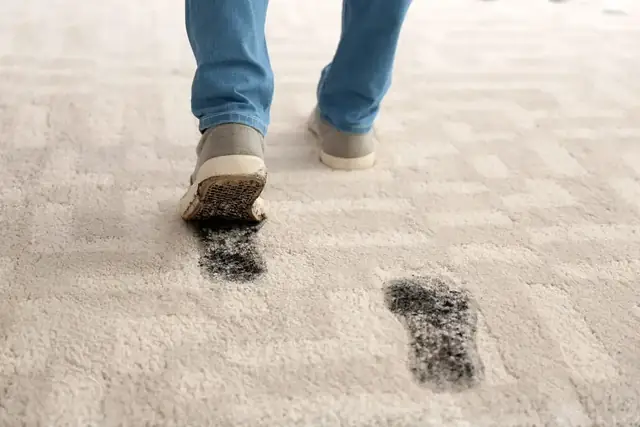
Walk into your living room on a humid July afternoon and something feels off. The air feels heavy, the windows may be closed against the heat, and there it is — that damp, earthy smell rising from the carpet. If you live in the Chicago area, you are not imagining it. Summer humidity routinely climbs to 60–80%, and your carpets absorb more moisture than most people realize.
Carpets act like sponges. They trap humidity from the air, sweat from bare feet, and moisture from old spills that never fully dried. Over time, that trapped dampness creates the musty odor so many homeowners notice every summer. The good news is that musty carpet smell is usually fixable — and understanding why it happens is the first step toward a fresher home.
In this guide, we will explain why Chicago summers are especially hard on carpets, what causes musty odors to develop, what you can do at home, and when professional carpet cleaning is the smarter call.
Why Carpets Smell Musty in the Summer
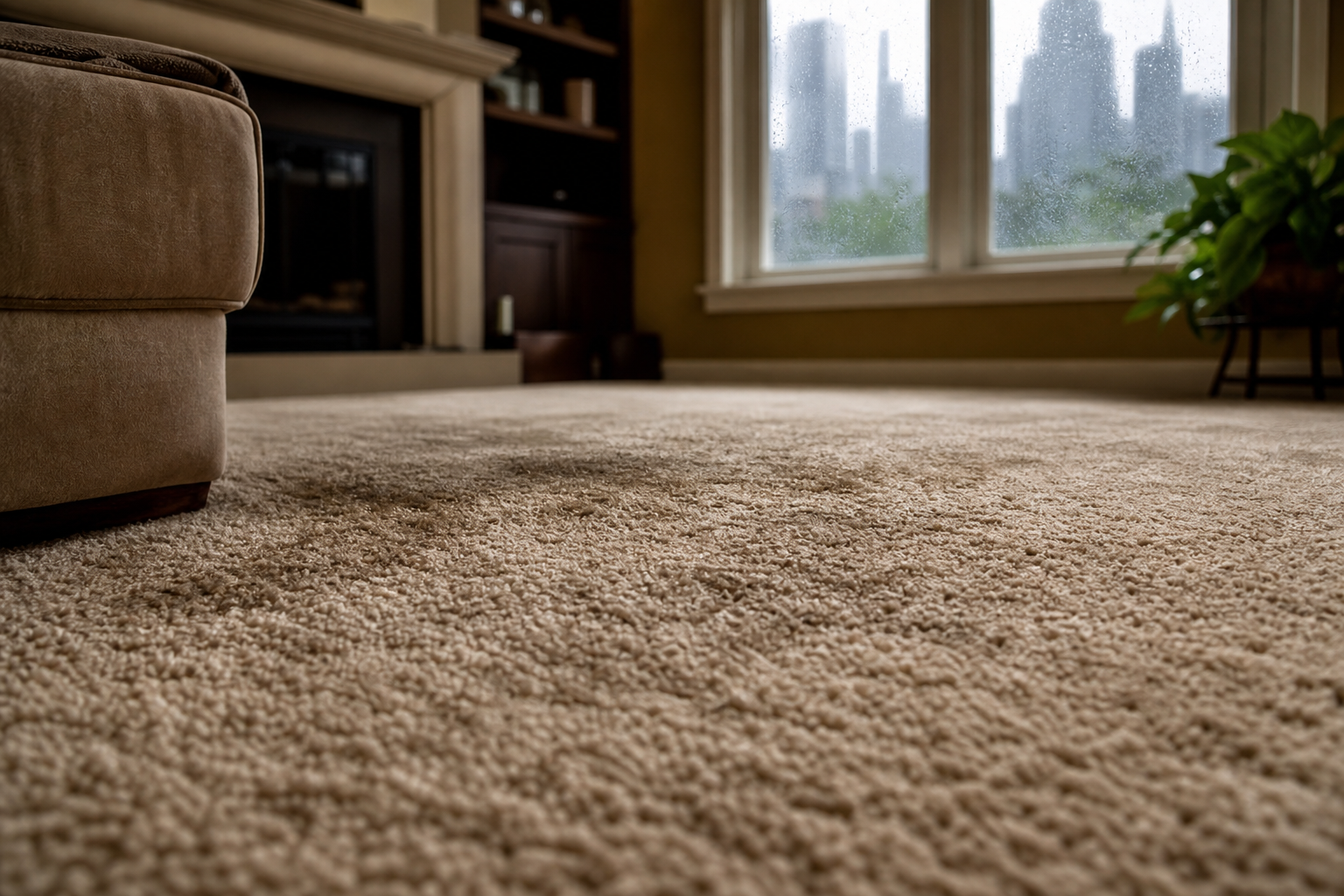
Musty carpet odor is almost always a moisture problem. When humidity levels rise, carpet fibers and the padding underneath absorb water vapor from the air. If that moisture cannot escape — because windows stay shut, AC runs constantly, or airflow is limited — it settles deep into the pile and pad.
That damp environment is exactly what mold and mildew need to grow. According to the EPA, mold can begin developing on damp surfaces within 24 to 48 hours. Carpet backing and padding hold moisture far longer than hard floors, which is why the smell often returns even after you vacuum or spray air freshener.
Chicago makes this worse. Our summers are hot and sticky, our winters are dry, and that seasonal swing stresses natural fibers like wool. Homes near the lake, in older buildings, or with carpet over hardwood subfloors are especially vulnerable. The odor is not just unpleasant — it can affect indoor air quality and trigger allergies for sensitive family members.
Common Causes of Musty Carpet Odor
Humidity is the main driver, but several everyday factors combine to create that musty smell. Identifying the source helps you choose the right fix.
Trapped Humidity and Poor Airflow
Closed windows, running AC all day, and limited cross-ventilation trap moisture inside. Carpet in bedrooms, hallways, and rooms without ceiling fans often smell worse because air barely circulates there. If you notice the odor strongest when you first walk into a room, poor airflow is likely part of the problem.
Old Spills and Pet Accidents
A spill from months ago — juice, water, or cleaning solution — can leave moisture trapped in the pad even when the surface looks dry. The same goes for pet stains and odors. Urine soaks through fibers into the backing, and summer humidity reactivates those odors. When the source is a pet, cat and dog urine odor removal treats the pad and backing rather than masking the smell. You may smell it more in humid weather even if the accident happened in winter.
Basements, AC Condensation, and Damp Subfloors
Basement carpets and rooms below grade face constant moisture pressure. Condensation from window AC units can drip onto carpet edges. Damp subfloors — common in older Chicago homes — wick moisture up into padding from below. Any of these conditions can produce a persistent musty smell that no amount of surface cleaning will fully remove.
How to Get Rid of Musty Carpet Smells
Before you call a professional, there are practical steps that can reduce mild musty odors — especially if the problem is recent and limited to one room.
What You Can Do at Home
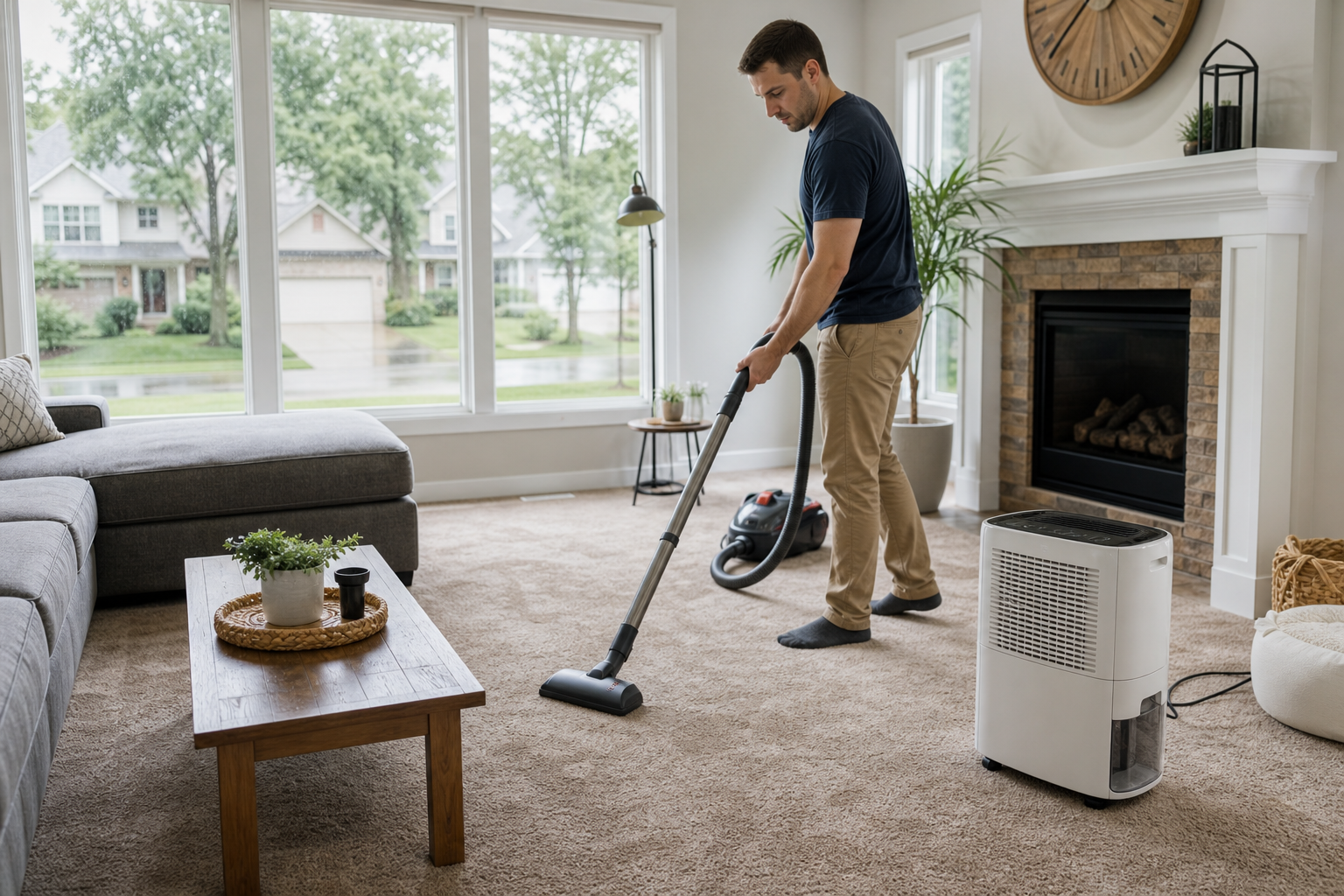
Start by vacuuming thoroughly, including edges and under furniture. Sprinkle baking soda across the carpet, let it sit for several hours or overnight, then vacuum again. Baking soda absorbs odors without adding moisture.
Run a dehumidifier in affected rooms and aim to keep relative humidity below 50%. Open windows on dry days to improve airflow, and use fans to speed drying if the carpet feels damp to the touch. Address spills immediately — blot, do not rub — and make sure the area dries completely within a few hours.
For light odors, these steps may be enough. For deeper problems, see our guide on carpet stain removal for safe spot-treatment techniques.
When DIY Is Not Enough
If the musty smell persists after a week of home treatment, returns every time humidity rises, or is accompanied by dark spots on the carpet or pad, the moisture likely sits too deep for DIY methods. Mold in carpet padding cannot be fully removed with household products — the affected padding often needs professional extraction or replacement.
At that point, searching for carpet cleaning near me makes sense. A trained technician can assess whether hot water extraction, deodorizing treatment, or pad replacement is needed. Trying to mask the odor with fragrance sprays only hides the problem temporarily.
How Professional Carpet Cleaning Removes Musty Odors
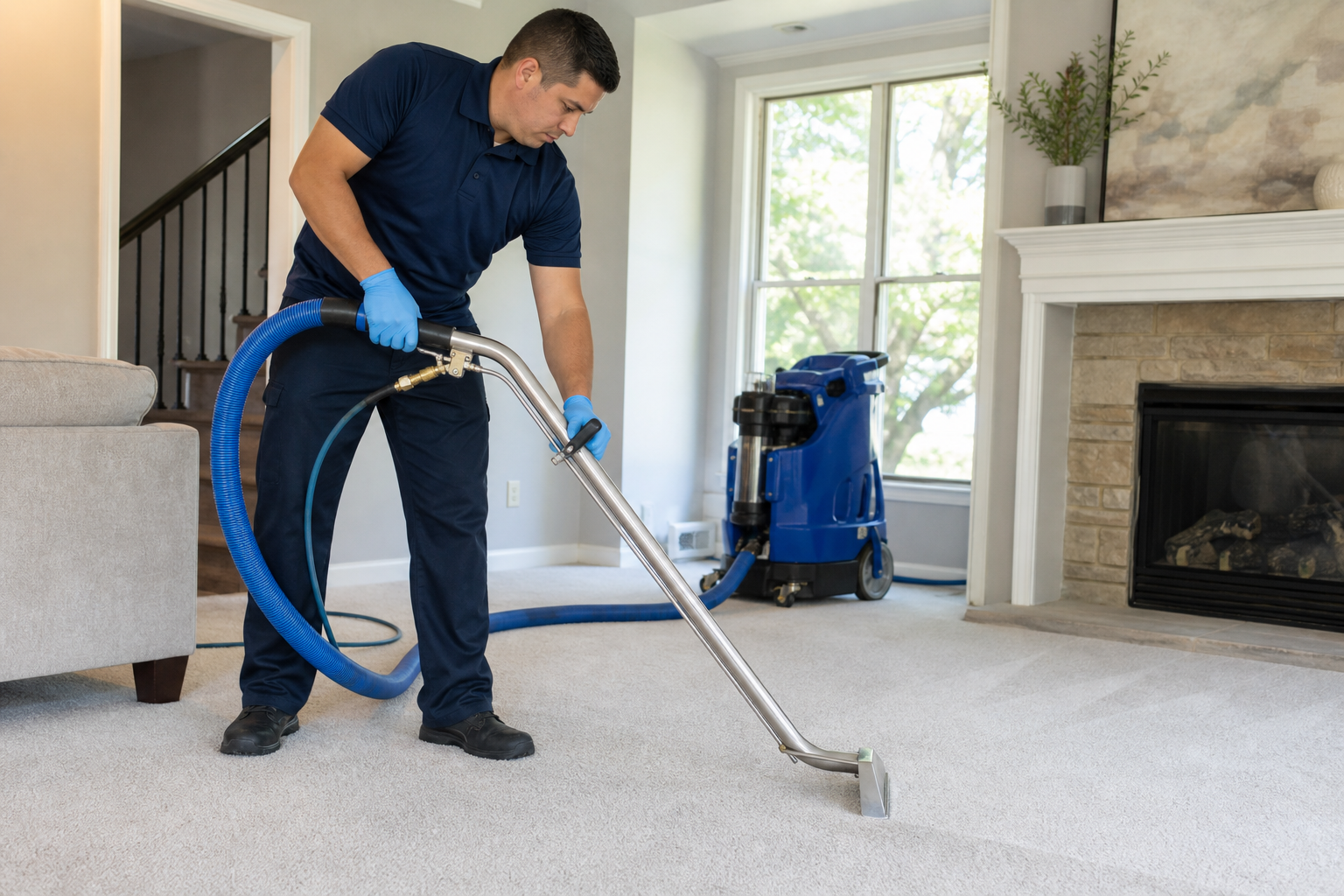
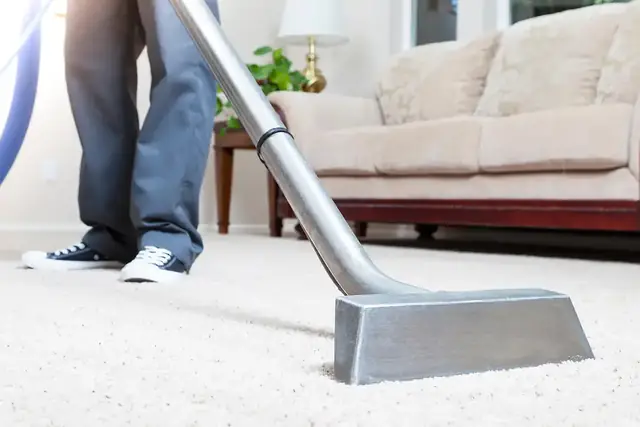
Professional cleaning targets the source — not just the surface. Hot water extraction pulls embedded moisture, dirt, and odor-causing bacteria from deep within the fibers and pad. Combined with a proper deodorizing treatment, it neutralizes musty smells rather than covering them up.
Summer is actually an ideal time to book. Warm air and open windows help carpets dry faster after cleaning, often within four to six hours with professional equipment. That faster drying reduces the risk of moisture lingering and odors returning.
At My Carpet Cleaning, transparent pricing makes it easy to plan ahead. Carpet cleaning starts at $100 for a single area (up to 300 sq ft), $180 for two areas, and $50 for each additional area. A deodorizing treatment that targets musty odors is just $15 per area. Appointments carry a minimum charge of $180 to $220 depending on your location — use our online calculator to get an instant price estimate for your home.
We also clean upholstery and area rugs, which often hold the same summer odors as wall-to-wall carpet. Treating everything together gives you a fresher result throughout the house.
Also Read: Why Do You Need Professional Carpet Cleaning?
Keep Your Summer Carpets Fresh
Prevention goes a long way once your carpets are clean. Place absorbent mats at every entry to catch moisture from shoes and pets. Run a dehumidifier during the stickiest weeks of summer. Vacuum high-traffic areas at least twice a week, and deal with spills the same day they happen.
If you have wool or natural-fiber rugs, remember that Chicago humidity swings can loosen fringe and affect dyes over time. Schedule professional cleaning every 12 to 18 months for living areas, or every six months if you have pets, kids, or allergy sufferers at home.
Do not forget about furniture and rugs — odors do not stay confined to one surface. A whole-home refresh keeps every room feeling clean through the hottest months.
Book a Summer Carpet Cleaning in the Chicago Area
Musty carpet smell in summer is common in Chicagoland, but it does not have to be permanent. Whether humidity, old spills, or pet accidents are behind the odor, the right cleaning approach can restore a fresh, healthy home.
The same odor often comes back in the fall, the first time the furnace runs and warm air moves through the room again. If that is when you noticed yours, read why your house smells when the heat comes on.
My Carpet Cleaning serves homeowners across the North Shore and greater Chicago area — including Northbrook, Glenview, Evanston, and dozens of surrounding suburbs. We are based at 2970 Maria Ave, Ste 229 C, Northbrook, IL 60062. Find us on Google Maps, browse our full list of service areas, or call (847) 994-1171 to schedule your summer carpet cleaning today.