Key Takeaways
- A stain that vanishes while the carpet is wet and returns as it dries is wicking: the spill soaked into the pad and backing, and moisture carried it back up through the pile.
- Store-bought spot cleaners that are not rinsed out leave a sticky residue that collects soil. The "stain" that returns a week later is dirt stuck to detergent.
- Some stains were never removed, only lightened. Wet pile hides color; dry pile standing upright shows it again.
- Pet urine returns on its own schedule: dried urine leaves salts deep in the carpet, pad and subfloor that reactivate in warm, humid weather. We find them with a UV light and a moisture meter.
- Our sequence is pre-treat, hot water extraction with a neutral rinse, air movers, and a re-treat if needed. Not happy? Call us within 7 days and we will re-clean the area or refund your payment.
- Stain treatment is $15 per area on top of the carpet rate.
The Spot Was Gone. Then It Was Back.
This call comes in two versions: a spot you cleaned yourself that returned two days later, or a few spots that came back within a week of a whole-house cleaning. Both have the same four explanations, and the fix depends on which one you have.
1. Wicking From the Pad and Backing
Carpet is three layers: the pile you walk on, the backing it is tufted into, and the pad underneath. A spill of any size goes down through all three. Blotting, or a wand pass, cleans the pile, but the backing and pad are still holding part of the spill. As the carpet dries, moisture moves up through the pile and evaporates at the fiber tips, carrying dissolved material from the spill with it.
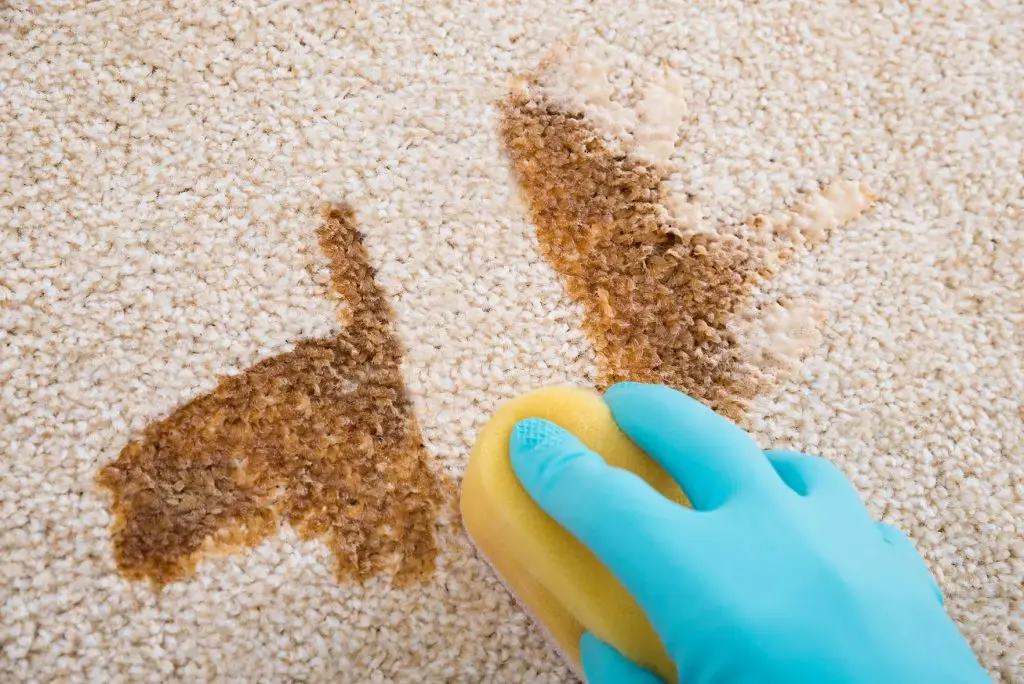
A wicked stain returns within a day or two, as the carpet finishes drying. It is a softer, larger, blurrier version of the original, and it returns in the same place no matter how often the surface is cleaned. It follows big liquid spills. The fix is to get the spill out of the lower layers rather than off the top: a pre-treatment that dissolves what is down there, hot water extraction with extra dry passes over the spot, and an air mover aimed across it so the surface dries before moisture from below has time to travel up.
2. Soap Residue From Store-Bought Cleaners
Most foaming spot sprays and rental-machine shampoos are detergents, and detergents are designed to grab soil. If the detergent stays in the carpet, it keeps grabbing: every bit of soil from shoes, the vacuum and the air sticks to it, and the spot you cleaned becomes the dirtiest square foot in the room.
If the returned spot feels slightly stiff or tacky, and the color is gray-brown rather than the color of whatever was spilled, it is residue. Our products page says it plainly: leftover residue is the number-one reason carpets re-soil fast. The rinse we run during extraction, All Fiber Rinse, neutralizes the alkaline pre-spray, flushes out detergent residue and rebalances the carpet's pH so nothing sticky is left behind.
3. Stains That Were Never Removed, Only Lightened
Wet carpet hides a lot. The fibers lie flat and the color darkens evenly, so a stain that has only been lightened looks gone. As the pile dries and stands back up, the fibers that still carry color are visible again.
It happens most with dyes and browning. A cleaning that lifts a wine or juice spill can leave dye in the fiber. Coffee, tea and sugary drinks leave a brown ring as the sugars dry, and that ring is often more visible after cleaning because the surrounding carpet is now clean. Our stain removal page has a stain-by-stain guide with the promise we make on every job: we never promise a stain is gone before we see it; what we can promise is the right chemistry and an honest answer on site. For color still in the fiber after extraction, we use an oxygen-based treatment, Pure O2 Sweet Breeze OSR, that lifts the color out without bleaching the fiber.
4. Pet Urine Below the Surface
When urine dries, the water evaporates but leaves behind concentrated uric-acid crystals, salts that bond to the carpet fibers and reactivate every time the air gets warm or humid. Gravity also pulls urine straight down into the pad and even the subfloor. Blotting the top or spraying an air freshener never reaches those lower layers, so the odor keeps wicking back up.
We locate every accident, including hidden ones, with a UV light and a moisture meter, and map how far each spot has spread. Then we saturate the spot so the crystallized salts re-dissolve, apply a bio-enzyme treatment that digests the urine and the odor-causing bacteria, flush it out with hot water extraction, and treat the pad and, when needed, seal the subfloor so the odor cannot wick back up. The full method is on our cat and dog urine odor removal page. Light, recent spots are covered by stain treatment and deodorizer at $15 per area each; urine that reached the pad is quoted after the UV mapping, because the cost depends on how much floor is affected, not on the size of the room.
What We Do Differently
The sequence, done every time:
- Identify first. What was spilled, when, and what has been tried on it.
- Pre-treat and let it dwell. A tannin product for wine and coffee, a solvent for grease and ink, an enzyme for anything that came from a pet or a person, given time to work.
- Hot water extraction with a neutral rinse. The pile is rinsed with hot water and the dissolved stain, the pre-spray and any old residue are pulled straight back out. Nothing is left behind to attract soil.
- Extra dry passes over the spot, so less moisture is left to wick up from below.
- Air movers. Fast surface drying is the best defense against wicking. Carpet is dry in 2 to 4 hours, up to 6 on a heavy job.
- Walk-through, and a re-treat if needed. If a spot comes back as the carpet finishes drying, we come back. Not happy? Call us within 7 days and we will re-clean the area or refund your payment.
Stain Types and the Risk They Come Back
The outlook column is the one we publish on the stain removal page. The last column is the question this post is about.
| Stain | Outlook | Comes back? |
|---|---|---|
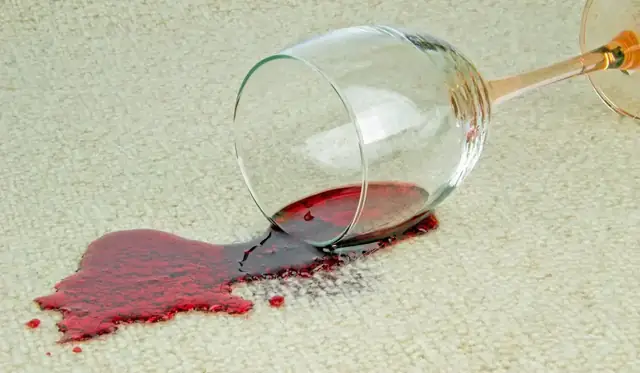
| Red wine | Usually removable, especially when fresh; set-in wine on wool often lightens but may not fully remove. | High if the glass reached the pad: wine wicks as the carpet dries. |
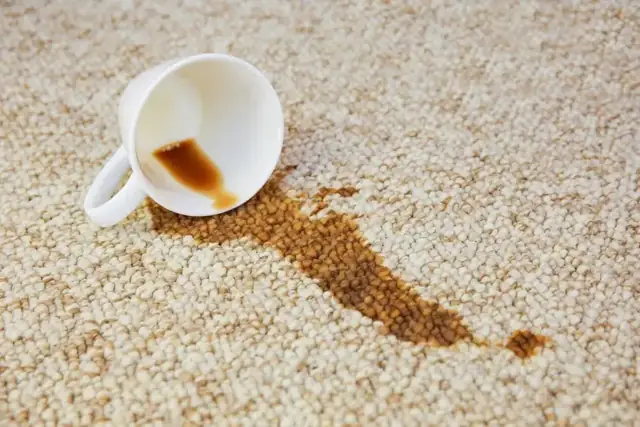
| Coffee and tea | Usually removable; sugary or creamy drinks that sat for weeks can leave a faint shadow. | Medium: sugar and cream left behind re-soil unless rinsed out. |
| Pet urine | Usually removable when caught early; old urine that has yellowed the fiber often lightens but may not fully remove if set. | High until the pad is treated: the salts reactivate in humid weather. |
| Grease and oil | Usually removable; heavy cooking oil on light carpet can leave a slight shadow. | Medium: oil left in the fiber grabs soil and darkens. |
| Ink | Often lightens, may not fully remove if set; ballpoint and permanent marker are the hardest. | Low: what remains after treatment is what you will see. |
| Blood | Usually removable when fresh; dried blood often lightens but may not fully remove if set. | Low once treated; heat before treatment sets it. |
| Mud and clay | Usually removable; red clay carries iron that can leave a faint tint. | Low: it is grit, not dye. |
| Rust | Specialist treatment, results vary; the metal source has to go or the stain returns. | Returns while the metal leg, radiator foot or nail head stays in contact. |
Rust is a Chicago problem: radiators, cast-iron furniture feet and old nail heads are common in the city's older housing, and the mark returns until the metal is lifted off the carpet. The $15 stain treatment handles the mark; a foil tab under the leg handles the cause.
What to Do at Home Before We Arrive
Blot, do not rub, with a clean white towel, from the outside of the spot inward. Dab with cool water and blot again. Skip heat, which sets protein and dye stains, and skip the foaming sprays; if one has already gone on, stop adding product and blot with water. For wine, skip the salt and the white wine too; our red wine stain removal page covers that one in detail. Then put a fan on the spot. A single stained cushion usually needs only an upholstery spot treatment, not the whole piece.
What It Costs
Stain treatment is $15 per area on top of the carpet rate, and it covers the spots in that area, not one spot. Carpet is $100 for one area up to 300 sq ft, $180 for two, and $50 for each additional area, with a $180 appointment minimum ($220 inside Chicago ZIP codes). The full schedule is on the pricing page.
IICRC-certified technicians, family-owned since 1998, 4.9 stars from 300+ Google reviews. Same-week appointments, same-day when available: Chicago (773) 997-1807, Northbrook (847) 994-1171, Bloomingdale (630) 822-7155, Clarendon Hills (630) 822-7133.
FAQ: Stains That Come Back
Why did the stain come back a few days after cleaning?
Almost always wicking. The spill soaked into the backing and pad, the surface was cleaned, and as the carpet dried, moisture rose through the pile and brought the stain with it. The fix is to treat and extract the lower layers and dry the spot fast with an air mover.
Can a stain that keeps coming back be removed for good?
Usually. Wicking spots respond to a deeper pre-treatment, extra extraction passes and fast drying; residue spots respond to a plain rinse that pulls the old detergent out. The exception is a stain that was only lightened, where what remains after treatment is what you will see, and we tell you which kind you have first.
Does the $15 stain treatment cover every spot in the room?
Yes. Stain treatment is $15 per area, an area being one room or open space up to 300 sq ft, and it covers the spots in that area rather than a single spot. Urine that soaked through to the pad is quoted separately after we map it with a UV light.
Why does my carpet get dirty faster where I used a spray cleaner?
Because the detergent is still in the carpet. Foaming sprays that are not rinsed out leave a sticky residue that grabs soil from shoes and the air, so the cleaned spot becomes the dirtiest square foot in the room. A neutral rinse during hot water extraction flushes it out.
How do you know whether a pet stain reached the pad?
With a UV light and a moisture meter. Dried urine glows under UV light, so we find every spot with the room lights off, and the moisture meter tells us whether the pad is involved and how far each spot has spread. Then we quote before starting.
Do you guarantee the stain will not come back?
We guarantee the work. Not happy? Call us within 7 days and we will re-clean the area or refund your payment. We never promise a stain is gone before we see it; set-in dye and old urine that has yellowed the fiber often lighten but may not fully remove, and we say so at the walk-through.