
Carpet stain removal is mostly decided in the first ten minutes. A spill that is blotted, rinsed with cool water and treated with the right cleaner before it dries usually comes out completely; the same spill scrubbed, heated or left overnight becomes a shadow that even professional treatment may only lighten. Here is the ten-minute routine, a stain-by-stain table for the seven most common spills, and the point at which it is time to call us.
Key Takeaways
- Blot, never rub. Press a white towel into the spill and stand on it. Rubbing frays the fiber and spreads the stain.
- Cool water only. Heat sets protein (blood, pet accidents, food) and sugar (wine, juice, soda) into the fiber.
- Know the stain before you treat it. Tannin, protein and oil each want a different cleaner; the wrong one sets the stain.
- Small amounts, from the outside in, then a dry towel weighted on the spot overnight so it does not wick back up.
- Professional stain treatment is $15 per area on top of cleaning. Fresh stains usually come out; set-in ones usually lighten, and we tell you which before we start.
The First 10 Minutes, Minute by Minute
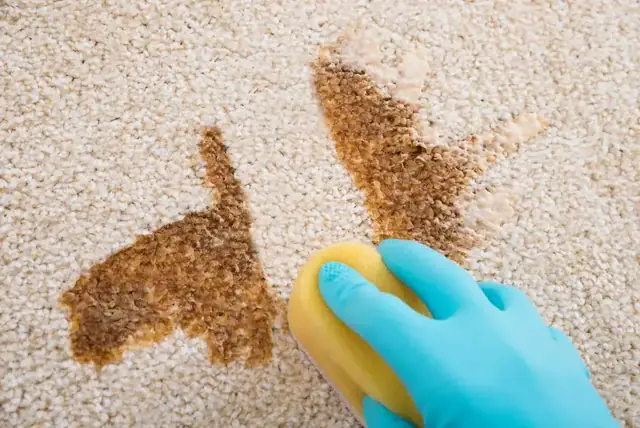
- Minutes 0 to 1: lift and blot. Scoop any solids straight up with a spoon or scraper. Fold a white towel or a stack of paper towels, press it onto the spill and stand on it. Replace the towel as it picks up liquid until a clean towel comes up nearly dry.
- Minutes 1 to 3: cool water. Mist the spot lightly with cool water from a spray bottle, never a pour, and blot again. Repeat two or three times to dilute what is left without spreading it.
- Minutes 3 to 5: identify the stain. Tannin stains are drinks: wine, coffee, tea, juice. Protein stains are from living things: blood, pet accidents, milk, egg, most food. Oil stains are grease, makeup, ink and wax. Check the table below for the first aid that fits.
- Minutes 5 to 8: treat with a small amount of the right cleaner. Tannin: cool water with a drop of clear dish soap. Protein: cool water, then an enzyme cleaner. Oil: no water at all; blot dry, then a solvent spotter made for carpet. Apply to a cloth, not to the carpet, and work from the outside of the spot toward the center.
- Minutes 8 to 10: rinse, blot, weight. Mist with cool water to rinse out the cleaner, blot dry, then lay a dry towel over the spot with a book on it and leave it overnight. The towel wicks up what is left in the pile as it dries. Vacuum in the morning.
Stain-by-Stain Quick Table
This is the same table our technicians work from on our stain removal page: what to do at home in the first minutes, what we do when you call, and an honest outlook.
| Stain | First aid at home | What we do | Outlook |
|---|---|---|---|
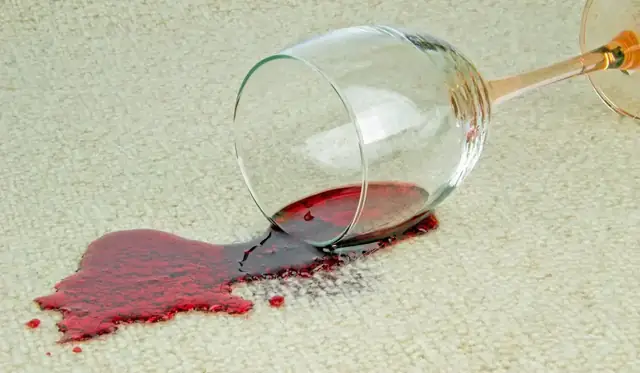
| Red wine | Blot, never rub, with a white cloth, then dab with cold water; skip salt, white wine and heat. | Specialty pre-spray for tannin dyes, then hot water extraction, with an oxidizer on any color that remains. | Usually removable, especially when fresh; set-in wine on wool often lightens but may not fully remove. |
| Coffee and tea | Blot up as much as you can and dab with a little cold water; no heat and no bleach. | Tannin-specific pre-spray and hot water extraction; an oxidizer lifts the brown ring if one is left. | Usually removable; sugary or creamy drinks that sat for weeks can leave a faint shadow. |
| Pet urine | Blot thoroughly with paper towels and dab with cool water; no heat, and skip ammonia-based cleaners, which smell like urine to a pet. | Enzyme pre-treatment, hot water extraction, a sub-surface flush when the pad is affected, then a deodorizer. | Usually removable when caught early; old urine that has yellowed the fiber often lightens but may not fully remove if set. |
| Grease and oil | Scrape off any solids and blot; do not add water, which spreads oil, and never apply heat. | Solvent-based spotter to dissolve the oil, then hot water extraction to rinse it out. | Usually removable; heavy cooking oil on light carpet can leave a slight shadow. |
| Ink | Blot gently with a dry white cloth without rubbing or spreading it; do not add water or hairspray. | Solvent spotter worked from the outside in, then hot water extraction; dye-based inks may get an oxidizer. | Often lightens, may not fully remove if set; ballpoint and permanent marker are the hardest. |
| Blood | Blot with cold water only; hot water or heat cooks the protein and sets the stain. | Protein-digesting enzyme pre-treatment and hot water extraction, with a mild oxidizer if a shadow remains. | Usually removable when fresh; dried blood often lightens but may not fully remove if set. |
| Mud and clay | Let it dry completely, vacuum up the loose soil, then blot the rest with cold water. | Pre-spray to suspend the fine clay, agitation, then hot water extraction. | Usually removable; red clay carries iron that can leave a faint tint. |
Red wine deserves its own page because it is the most common call we get; red wine stain removal covers the fresh-spill routine and what the oxidizer step does when a ring is left.
What Not to Do
- Rub or scrub. Frayed fiber tips reflect light differently and leave a dull patch even after the stain is gone.
- Hot water, a hair dryer or an iron. Heat sets protein and sugar. The one exception is candle wax, which is lifted with a warm iron over an absorbent cloth.
- Bleach, peroxide or "oxy" sprays on colored carpet. They can remove the carpet dye and leave a pale spot that is permanent.
- Salt or white wine on red wine, hairspray on ink. Folk remedies that spread the stain or add a second one.
- Too much product. Cleaner left in the pile attracts soil and dries as a dark spot. Rinse it out.
- Over-wetting. Liquid that reaches the pad wicks back to the surface as it dries, which is why a stain "comes back" a day later.
Why a Stain Comes Back
If a spot disappears and reappears a day or two later, it was never gone; it was in the pad. As the carpet dries from the top down, moisture in the pad carries the stain back up the fiber. Rental machines cause this often because they leave a lot of water behind. The fix is to treat and extract the spot with enough vacuum to pull the pad dry, which is what truck-mounted hot water extraction does, or, for pet urine that has spread through the pad, a sub-surface flush after a UV inspection maps every spot.
When to Call, and What It Costs
Call when the spot is still visible after your second round, when you do not know what it is, when it is on wool or a light carpet you cannot afford to experiment on, or when it has dried in before you found it. On a carpet cleaning visit we identify the stain, pre-treat it with the chemistry that fits, agitate, and flush it out with truck-mounted hot water extraction, which rinses the fiber instead of pushing the stain down. Stain treatment is $15 per area on top of the cleaning price of $100 for one area, $180 for two and $50 for each additional area, with a $180 appointment minimum ($220 inside Chicago ZIP codes). The carpet is dry in 2 to 4 hours.
We never promise a stain is gone before we see it. Fresh wine, coffee, pet urine, grease, blood and mud usually come out; set-in versions usually lighten and may not fully remove, and the technician tells you which to expect before starting. Here is why the professional result differs from a rental machine on the same stain. The guarantee is simple: Not happy? Call us within 7 days and we will re-clean the area or refund your payment. Same-week appointments, same-day when available; send us a photo of the spot and we will tell you what to expect.
Frequently Asked Questions
What should I do first when something spills on the carpet?
Blot. Fold a white towel, press it onto the spill and stand on it, replacing the towel as it picks up liquid. Lift any solids straight up first. Do not rub, do not add hot water, and do not reach for a store spray until you know what the stain is.
Should I use hot or cold water on a carpet stain?
Cold or cool water, every time. Heat sets protein stains such as blood, pet accidents and food, and it caramelizes the sugar in drinks so they bond to the fiber. The hot water in professional hot water extraction works because it is combined with the right pre-spray and extracted immediately, not left in the carpet.
Can old, set-in carpet stains be removed?
Often they can be lightened and sometimes removed, depending on the stain and the fiber. Fresh wine, coffee, pet urine, grease, blood and mud are usually removable. Stains that sat for weeks, were treated with heat or bleach, or are on wool more often lighten than vanish. We tell you which to expect before we start, not after.
How much does carpet stain removal cost?
Stain treatment is $15 per area on top of the carpet cleaning price: $100 for one area (up to 300 sq ft), $180 for two, $50 for each additional area, with a $180 appointment minimum ($220 inside Chicago ZIP codes). Deodorizer, if the stain also smells, is $15 per area. Pet urine that has reached the pad is mapped with a UV light and quoted separately.
Can you remove one stain without cleaning the whole carpet?
Spot treatment is done as part of cleaning the area the stain is in, because the spot has to be rinsed and blended into the surrounding carpet or it dries as a clean patch. One area with stain treatment is $115, which is billed at the appointment minimum, so most customers have the whole room or a second room done on the same visit.
Does carpet protector help with stains?
Yes. A fiber protector applied after cleaning ($15 per area) makes spills bead on the surface for a few minutes instead of soaking in, which is exactly the time you need to blot. It does not make carpet stain-proof and it wears off in traffic lanes, so it is reapplied after each cleaning.