Key Takeaways
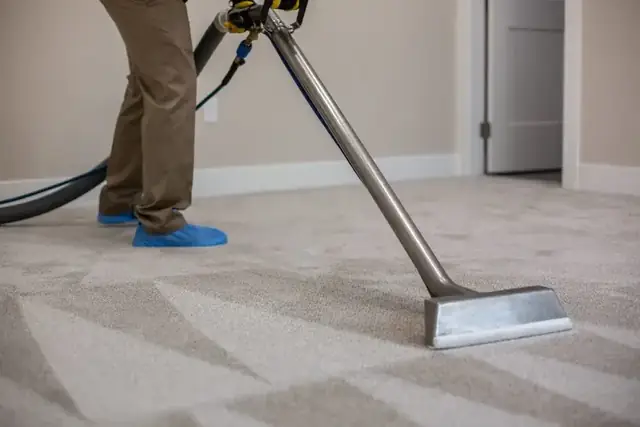
- Carpet cleaned with truck-mounted hot water extraction is dry in 2 to 4 hours with air movers, and up to 6 hours when heavy soil or a pet treatment put more water into the pile.
- Upholstery takes 4 to 8 hours. A rug cleaned in your home takes 4 to 8 hours; a rug washed at our plant takes 5 to 10 days, with free pickup and delivery.
- "Dries in an hour" is true of low-moisture cleaning, which we offer for commercial floors. It uses a fraction of the water and gives up the rinse that makes hot water extraction a deep clean.
- Chicago humidity moves the number more than anything else. A muggy July afternoon adds hours; a January furnace takes them away.
- Fans, the thermostat fan set to "on", socks instead of shoes, and the tabs under furniture legs are what speed drying at home.
- Carpet still damp after 24 hours is a problem, not a wait. Call whoever cleaned it.
The Honest Numbers, by Surface
"Dry" here means dry to the touch when you press a palm flat on the pile. These are the numbers we give at the door, and when a job is going to run long, the technician says so before leaving.
| Surface | Method | Dry time | Notes |
|---|---|---|---|
| Wall-to-wall carpet, normal soil | Truck-mounted hot water extraction, air movers | 2 to 4 hours | Walkable in socks sooner |
| Wall-to-wall carpet, heavy soil or urine treatment | Slower pass, CRB scrub or enzyme pre-treatment | Up to 6 hours | More water goes in and has to come out |
| Carpeted stairs | Hot water extraction | 2 to 4 hours | Corners of each step dry last |
| Upholstery | Hot water extraction or low moisture, by fabric code | 4 to 8 hours | Seat cushions dry slowest |
| Area rug cleaned in your home | Low moisture or hot water extraction on site | 4 to 8 hours | Air mover left running on the rug |
| Rug washed at our plant | Dusting, full submersion wash, controlled drying | 5 to 10 days | Free pickup and delivery |
| Carpet protector | Sprayed right after extraction | No extra time | Dries with the carpet |
| Commercial carpet, encapsulation or bonnet | Low moisture; soil crystallized or absorbed into a pad | About an hour | Walkable; vacuumed afterward |
What Changes Dry Time
Humidity and the Chicago calendar
Water leaves carpet by evaporating, and air that is already carrying moisture takes it slowly. Chicago summers routinely run 60 to 80 percent humidity, so a carpet cleaned on a muggy July afternoon sits at the 4-hour end or beyond. The same carpet cleaned in January, with the furnace drying the house, is often done at the 2-hour end. Air conditioning helps in summer because it removes moisture from the air as it cools it; a dehumidifier does the same in a basement, which is the slowest room in any season because the air down there is damp to begin with.
Fiber and pile
Most wall-to-wall carpet in Chicago homes is nylon, polyester or olefin, and all three release water quickly. Wool holds more and dries slower. Pile height matters as much: a dense plush or frieze holds more water than a low loop, and a thick pad under it holds more still. Berber loops feel dry on top early and keep moisture in the backing a while longer, so give them the full window before moving furniture back.
Soil load
Heavy soil needs more pre-spray, more dwell time and a slower wand pass, and a slower pass puts more water in before pulling it out. Matted lanes that get the $50 CRB deep-clean upgrade are worked and rinsed harder. Pet urine treatment is the extreme case: we deliberately saturate each spot so the dried salts re-dissolve and can be flushed out, which makes it a 6-hour room.
Airflow
Moving air carries evaporated water away and brings drier air in. We set air movers while we groom the pile and walk the rooms with you, and the difference between that and a closed bedroom with the door shut is measured in hours. After we leave, ceiling fans, box fans and the furnace blower take over.
How much water the method leaves behind
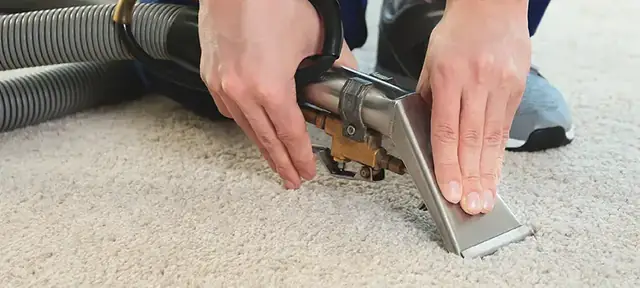
This explains most of the stories about carpet that took two days to dry. A truck-mounted unit heats the water, rinses it through the pile under pressure and pulls it straight back out with a vacuum far stronger than anything that plugs into a wall outlet. A rental machine puts down nearly as much water and recovers a fraction of it, so carpet cleaned with one can still be damp the next day and come out of it stiff. Low-moisture methods put down so little water that there is almost nothing to dry.
Why "Dries in an Hour" Is True, and What It Trades Away
We say "dry in about an hour" ourselves, on our commercial dry carpet cleaning page, so this is not a complaint about anyone's advertising. It is an explanation of what the phrase means.
Low-moisture methods like encapsulation and bonnet cleaning use a fraction of the water. A cleaning agent breaks down soil, then either crystallizes around it for vacuum removal or is absorbed into an absorbent pad. The result is clean, consistent-looking carpet that is dry, and walkable, in about an hour. For an office, a store or a lobby that cannot close, that is the right trade, and it is why we recommend it for regular maintenance of low-pile commercial carpet and high-traffic lanes.
What it gives up is the rinse. Encapsulation leaves the soil in the carpet, crystallized and brittle, for routine vacuuming to remove afterward. Bonnet cleaning lifts surface soil onto a pad and leaves what is deeper in the pile where it is. Neither flushes the carpet with hot water and pulls the dissolved soil, the pre-spray and the old residue back out. The choice is plain: choose hot water extraction when the carpet is heavily soiled or overdue for a deep clean, when you want the deepest possible soil and allergen removal, or as a periodic restorative clean between dry-clean cycles.
So when a residential quote promises a deep clean that is dry in an hour, either it is a low-moisture maintenance clean, which is fine as long as it is described that way, or the dry time is being rounded down. Ask which method is used and how the water is recovered. Some fibers also demand low moisture in a home: jute browns and shrinks if it is flooded, so the jute rug we cleaned in Barrington got spot work and an air mover, not a wash.
How to Speed Drying at Home
- Keep the air moving. Leave ceiling fans on and point a box fan across the carpet, not down at it. If we left an air mover running, let it finish.
- Set the thermostat fan to "on" instead of "auto." The blower circulates air through every room. In summer, run the air conditioning; it dries the air as it cools it.
- Open interior doors; open windows only on a dry day. A bedroom with the door shut dries slowest of all.
- Socks, not shoes. Street shoes carry grit that sticks to damp pile, and the dye in some soles transfers. Keep pets off until it is dry.
- Leave the tabs and blocks under furniture legs. They keep wood finish and metal off damp pile. Wood stain transfers and metal leaves rust, one of the hardest marks to take out of carpet. Pull them once the carpet is dry to the touch.
- Do not put area rugs back yet. A rug on damp carpet traps moisture under it, and both dry slower.
When Wet Carpet Is a Problem
Damp at the 4-hour mark on a humid day is normal. Damp at 24 hours is not, and it has three usual causes: far more water went in than came out, which is the rental-machine problem; there was no airflow, which is the closed-room problem; or the pad under the carpet is wet, which no amount of surface fanning fixes quickly. The sign of a wet pad is a musty smell within a day or two of cleaning, the same smell Chicago basements get every July. Our post on why carpets smell musty in summer covers what is happening under the carpet and when it needs more than a fan.
If we cleaned the carpet and it is still damp the next day, call the office that did the job. Every job carries the same guarantee: Not happy? Call us within 7 days and we will re-clean the area or refund your payment. That covers drying as much as it covers a spot that did not come out.
What It Costs, and What Is Included
Air movers, pre-spray, grooming and the walk-through are part of every area on every carpet cleaning job, not an add-on. Carpet is $100 for one area up to 300 sq ft, $180 for two, and $50 for each additional area, with a $180 appointment minimum ($220 inside Chicago ZIP codes). Carpet protector is $15 per area and adds no dry time. The full schedule is on the pricing page, and the calculator applies the right minimum from your ZIP code.
IICRC-certified technicians, family-owned since 1998, 4.9 stars from 300+ Google reviews. Same-week appointments, same-day when available: Chicago (773) 997-1807, Northbrook (847) 994-1171, Bloomingdale (630) 822-7155, Clarendon Hills (630) 822-7133.
FAQ: Carpet Drying Time
Can I walk on the carpet right after cleaning?
Yes, in clean socks or bare feet. Keep street shoes and pets off until it is dry to the touch, usually 2 to 4 hours, because grit and sole dye stick to damp pile.
How long should I wait to put furniture back?
Until the carpet is dry to the touch: 2 to 4 hours on most jobs, up to 6 with heavy soil. Leave the foil tabs and foam blocks under the legs until then, so wood finish and metal do not touch damp pile.
Does carpet dry faster in winter or summer in Chicago?
Winter. The furnace dries the air, so a carpet cleaned in January is usually dry at the 2-hour end. In July and August, at 60 to 80 percent humidity, the same carpet sits at the 4-hour end; running the air conditioning brings it back down.
Why is my carpet still damp after 24 hours?
Too much water went in, there was no airflow, or the pad underneath is wet. Rental machines leave most of the water behind, a closed room with no fan dries slowest, and a wet pad shows itself as a musty smell within a day or two. If we cleaned it, call the office that did the job.
Does carpet protector add to the drying time?
No. Protector is sprayed on right after extraction and dries with the carpet, so a protected area is dry in the same 2 to 4 hours. It is $15 per area.
Is dry carpet cleaning better because it dries faster?
It is different, not better. Low-moisture encapsulation and bonnet cleaning are dry in about an hour because they put down very little water, and we use them for commercial floors that cannot close. They do not rinse the carpet. For a home carpet that is overdue, hot water extraction removes more soil, and the honest dry time is 2 to 4 hours.