Key Takeaways
- A hot, dusty, singed smell in the first hour is normal. Dust that settled on the heat exchanger over the summer is burning off. It should fade the same day.
- A musty or sour smell is not burn-off and will not fade. Warm moving air is re-releasing odor from something that has been building since spring.
- If the smell returns on every heating cycle, the source is usually soft surfaces, not the ducts. Carpet, pad, rugs, and upholstery hold far more soil than any duct does.
- Duct cleaning is not the automatic first step. The EPA does not recommend it as routine maintenance — only when there is visible mold, vermin, or ducts genuinely clogged with debris.
- Rotten eggs or sulfur means leave the house and call the gas utility from outside. Carbon monoxide, by contrast, has no smell at all — that one is a detector's job, never your nose's.
- Most of this costs nothing to sort out yourself. Professional carpet cleaning runs $100 for one area and $180 for two (minimum $180, or $220 inside Chicago) when the odor is genuinely in the fiber, the backing, or the pad.
The Smell Arrives on a Schedule
The first genuinely cold night, someone turns the dial from off to heat. Twenty minutes later the house smells like a closed-up attic, or a basement, or something burning — and nobody can agree on which.
Our phone does the same thing every year. The week the temperature drops for real, the calls change overnight from stains to smells: we just turned the heat on and the whole house smells. It happens on such a reliable schedule that we can nearly predict the day from the forecast.
Here is the part most people have backwards. The furnace did not create a new smell. It re-released an old one. Your blower moves the entire volume of air in the house through the system several times an hour, and everything porous in the place — carpet, pad, rugs, sofa cushions, curtains, mattresses, the dog bed — has spent a humid summer quietly collecting soil. The first heating cycle is the first time in months that warm, moving air has passed over all of it at once.
So the useful question is not "what is that smell?" It is: does it fade, and does it come back every time the heat runs? Those two answers sort almost every case, and you can get both for free before anyone quotes you anything.
Three Smells, Three Different Causes
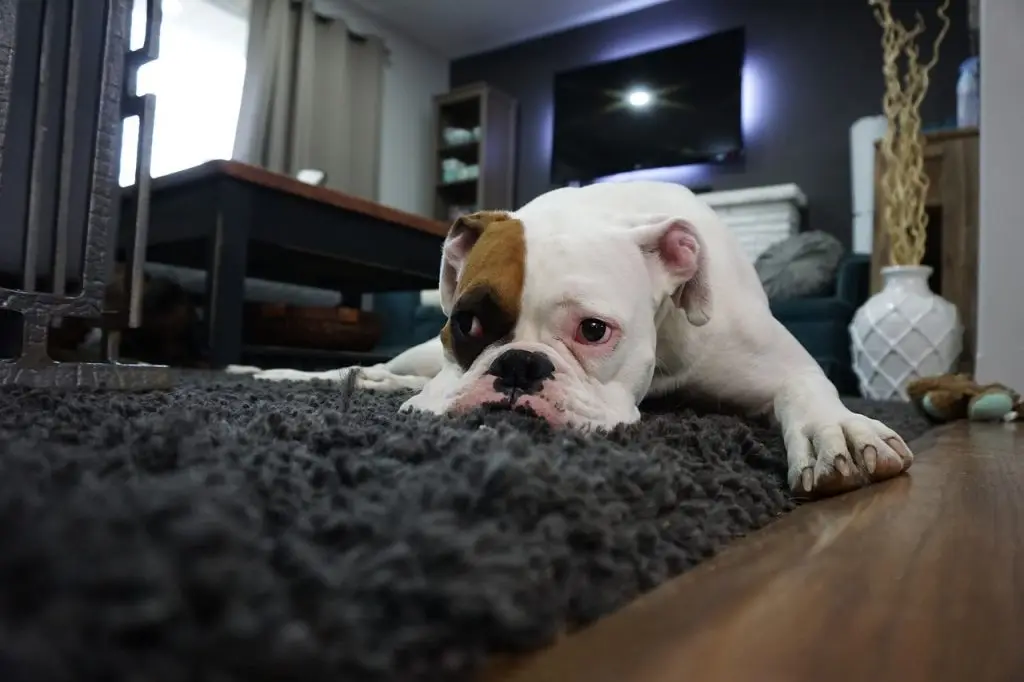
People describe the first-heat smell in a dozen ways, but it nearly always falls into three groups, and the groups have nothing to do with each other.
1. Hot dust: burning, singed, slightly electric
This is the most common and the least serious. Over the summer, fine dust settles on the heat exchanger, burners, and elements. The first time those surfaces get hot, the dust burns off. That is the sharp, hot, faintly scorched smell.
It is strongest in the first ten to sixty minutes, tapers over the next few hours, and should be gone within a day of normal running. There is nothing to clean and nothing to buy. Crack a window, let the system run through a few full cycles rather than flicking it on and off, and it resolves itself.
What is not this: an acrid, plastic, or electrical-burning smell, or a burning smell that is still there on day two. Melting insulation, scorched wiring, and a failing blower motor all smell like burning too, and none of them are things to wait out. Shut the system down and call an HVAC technician.
2. Musty, damp, basement-like
Musty means microbial. Moisture met organic material somewhere and something grew. That does not burn off and it does not fade — a musty smell that gets stronger the longer the heat runs is telling you the source is being warmed and ventilated, not consumed.
The source can be a whole-house humidifier that sat wet all summer, a condensate pan or drain, damp crawlspace or basement air pulled in through leaks in the return, wet insulation, or carpet and padding that took on humidity for three months and never fully dried. If you find visible mold anywhere in the process, deal with the water before anyone sprays anything. Mold cleaned off a surface while the moisture source is still there comes back in the same spot within weeks, and a patch much bigger than a couple of square feet is remediation work rather than cleaning work.
The carpet version of this problem is the same one we write about every July; it just goes unnoticed until the heat announces it. If the smell is worst near the floor, our guide to musty carpet odor and summer humidity explains what is happening down in the fiber.
3. Sour, Ammonia, or Wet Dog: Old Pet Urine the Heat Woke Up
This one is biological, and it is almost never in the furnace. It is in the room.
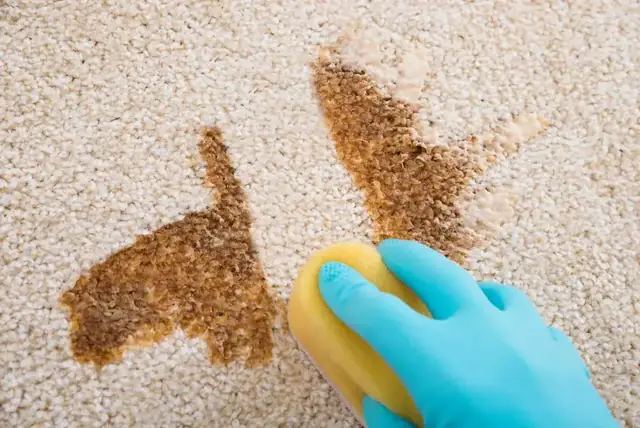
Old pet accidents are the single most common cause we find. Dried urine leaves salt crystals in the carpet backing and pad, and those salts are hygroscopic — they pull moisture out of the air. Add warmth and airflow and the odor compounds release all over again. That is the entire explanation for why a spot you could not smell in August becomes impossible to ignore in October, without anything new having happened. This is the job our cat and dog urine odor removal service is built for.
Spilled milk that soaked through, food debris worked into a sofa, and months of body oil in a favorite chair all behave the same way. None of them respond to fragrance. What they need is enzyme-based pet stain and odor removal that reaches as deep as the original spill did.
The 48-Hour Test
Before you spend a dollar, run this. It takes two days and it costs nothing.
- Note the time you first ran the heat. Then run it for a solid hour, with a window cracked, rather than switching it on and off.
- Leave the house for thirty minutes and come back in. This step matters more than people expect. Your nose adapts to an odor within about fifteen minutes, which is why you cannot smell your own house accurately while standing in it. Walking back in from outside is the only honest reading you will get.
- Repeat the next morning, and again at 48 hours.
- Kneel down. Put your nose six inches above the carpet in the worst room, then stand up and compare.
Now read the results:
- Weaker by hour two, gone by day two. Dust burn-off. Do nothing.
- Unchanged at 48 hours, and stronger whenever the heat cycles. The source is real and the system is distributing it. Keep going.
- Present in only one or two rooms. Then it is almost certainly not the furnace. Registers deliver the same air everywhere, so a smell that respects room boundaries has a room-specific source.
- Much stronger at floor level. Soft surfaces — carpet, pad, or rug, in that order of likelihood.
We ask every caller to do the kneeling version before we book anything. It settles the question in about thirty seconds, and a fair number of times it saves the customer a service call.
Why the Smell Survives a Duct Cleaning
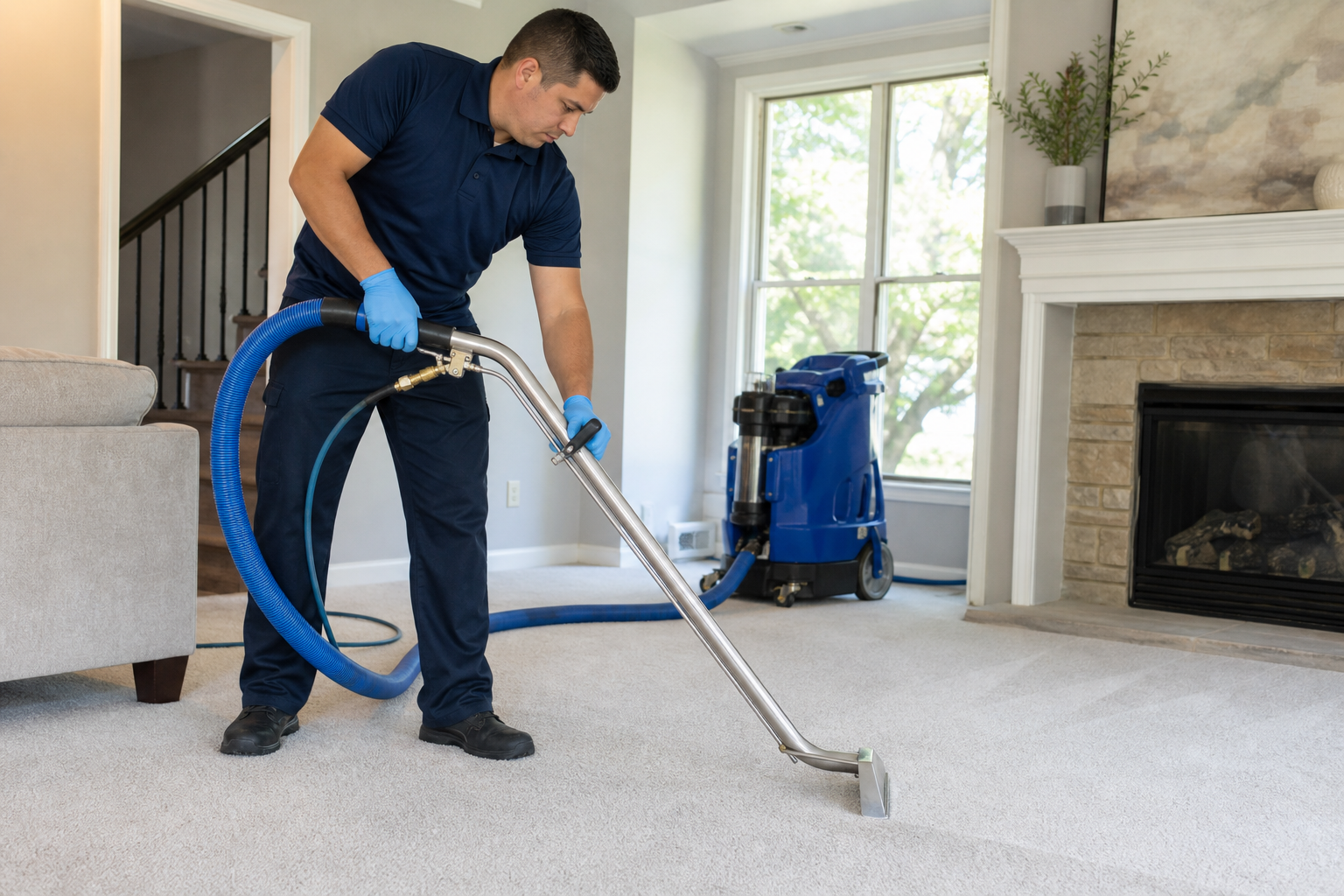
The instinct is to clean the ducts first, because the smell arrives through the vents. It is also the most expensive first move, and it frequently disappoints.
Start with the standard. The EPA's guidance on whether to have your home's air ducts cleaned does not recommend duct cleaning as routine maintenance. It points to specific triggers instead: substantial visible mold growth inside the ducts, ducts infested with vermin, or ducts so clogged with dust and debris that particles are actually being released into the room. Absent one of those, the agency's position is that duct cleaning has not been shown to prevent health problems or to measurably improve the air.
The physical reason is surface area. A duct is a smooth-walled pipe. A carpeted twelve-by-fifteen room contains thousands of square feet of fiber surface once you count every strand, sitting on a pad that behaves like a sponge, in a room that also holds a sofa, curtains, and a rug. That is where the reservoir is.
Warm air does not manufacture odor. It strips volatile compounds off surfaces and carries them around the house. Clean the pipe but leave the reservoir, and the smell comes back on the next cycle — because it never came from the pipe.
A sane order of operations: change the filter, deal with the soft surfaces and any obvious moisture source, and put duct cleaning last, only if you have actual evidence matching what the EPA describes.
What We Actually Find on October Calls
We have been running trucks around Chicago and the North Shore since 1998, and the first-heat calls sort into a short and repetitive list.
Old pet accidents nobody remembered. Far and away the most common. Usually in a room that gets little use, often behind or under furniture, frequently from a pet that has since passed away. A UV light finds them in seconds, and the homeowner is often genuinely surprised.
Carpet over concrete that never dried out. Below-grade and slab-adjacent rooms hold summer humidity in the pad with nothing visible on the surface. The tell is that the smell is dramatically worse at floor level and barely noticeable standing up.
The chair someone sits in every single evening. Upholstery absorbs body oil, sweat, and pet dander in a way carpet does not, and it never gets rotated or moved. If the smell follows you to the sofa rather than the floor, it is an upholstery cleaning problem, not a carpet one. It also tends to be the same piece of furniture that makes an allergy-prone household miserable all winter, which is the subject of our notes on upholstery cleaning for allergy sufferers.
A rug that was rolled and stored slightly damp in spring. Wool that went into storage before it was fully dry comes back out in the fall smelling like a cellar. That one needs area rug cleaning off-site, not a spot treatment.
And often enough, nothing that belongs to us at all. A humidifier pad, a condensate problem, a basement that needs a dehumidifier more than the carpet needs a truck. We say so, and we do not charge for the visit. It is the least profitable sentence we say all season, and it is the one that brings people back in spring.
For what it is worth, we do not diagnose these by nose. A moisture meter on the suspect areas and a UV light over the floor answer in ten minutes what an hour of sniffing will not, which is also why we would rather look than guess over the phone.
When It Is Not a Cleaning Problem — Stop and Call Someone Else
Some smells are not a cleaning question at all, and one of them is an emergency. This part is not sales advice, it is just what you should do.
- Rotten eggs or sulfur. That is the odorant added to natural gas. Leave the house, do not flip switches or use anything electrical, and call your gas utility or 911 from outside.
- Carbon monoxide has no smell whatsoever. This is the dangerous misconception of heating season. The NFPA calls it the invisible killer for exactly this reason — it is odorless and colorless, and it is produced whenever fuel burns incompletely. Your nose will never warn you, so the alarm has to. Test your CO alarms the day you turn the heat on for the year: same day, same habit, every year.
- Acrid, plastic, or electrical burning, or any burning smell still present on day two. Shut the system off and get an HVAC technician out.
- Visible water at or under the furnace. That is drainage or condensate, and cleaning the carpet around it fixes nothing until the leak is addressed.
We are a carpet cleaning company. Three of those four have nothing to do with us, and pretending otherwise would only cost you money.
What to Do This Week, For Free
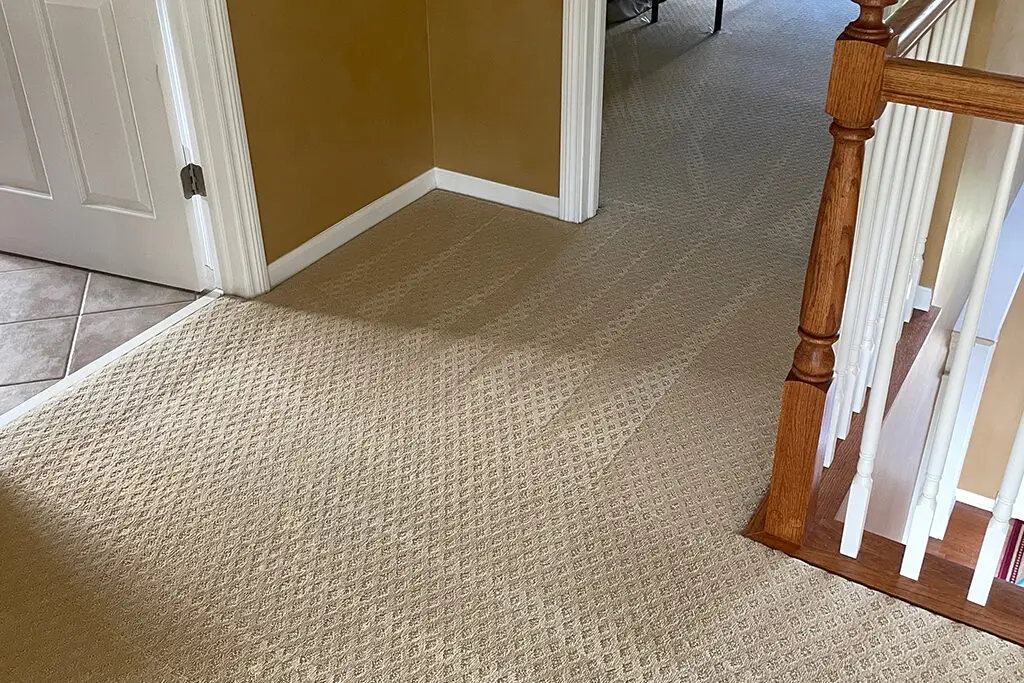
If the 48-hour test says the smell is real and living in your soft surfaces, there is a meaningful amount you can do before hiring anyone.
- Change the filter before the first real run, not after. A filter that sat in place all summer is already loaded.
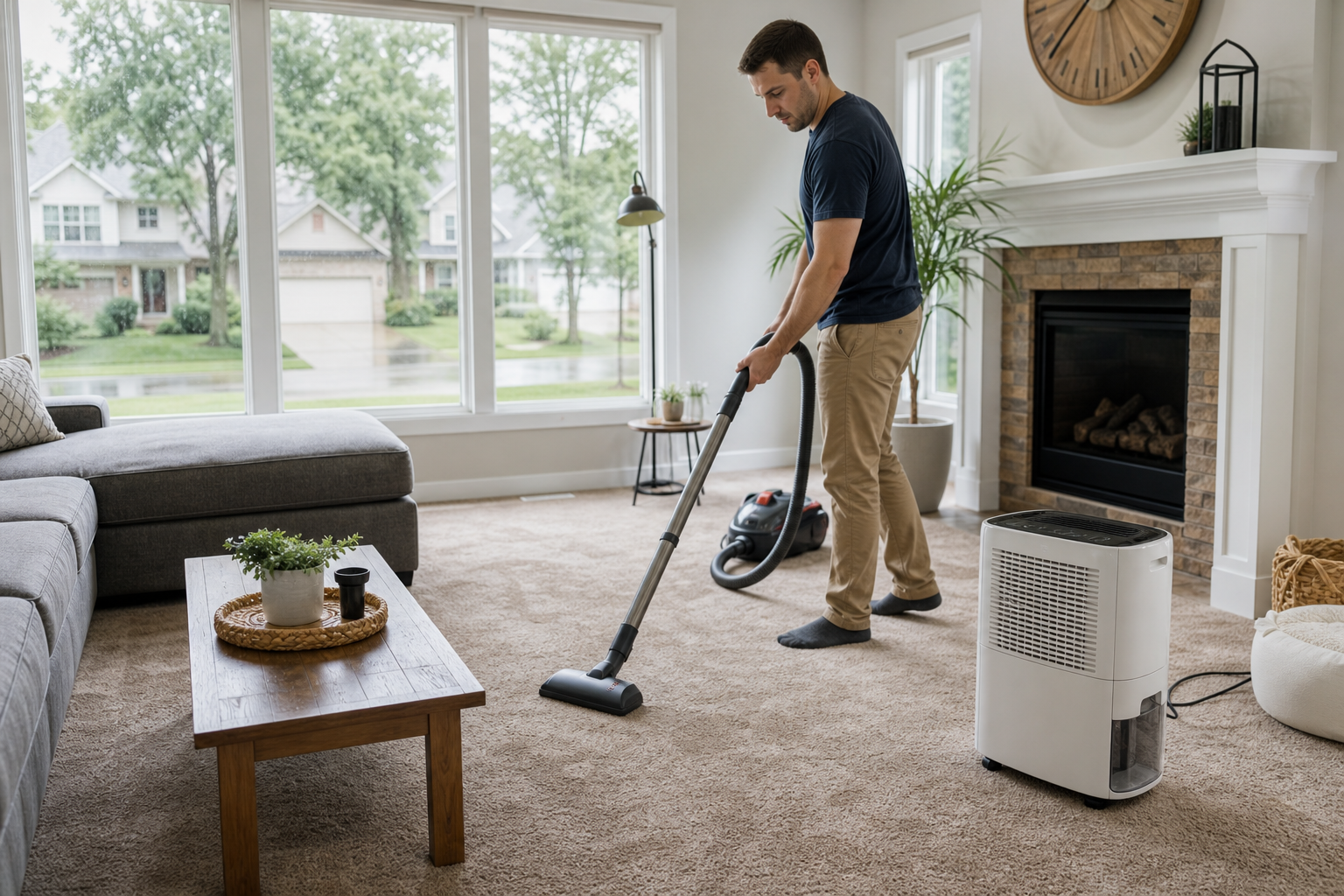
- Vacuum slowly, and in two directions. Most of the benefit comes from the third and fourth pass, not the first. Concentrate on the three feet in front of every supply register, where airborne soil lands, and along the baseboards.
- Pull the furniture off the walls once and vacuum the edges. That perimeter strip collects more soil than the middle of the room and almost never gets touched.
- Wash the pet bedding, throw blankets, and cushion covers. This is the largest odor reservoir most homes never treat, and it costs nothing but a laundry cycle.
- Air the house out ten minutes a day during the first week of heat. EPA research has long put indoor pollutant levels at roughly two to five times outdoor levels, and heating season is the stretch when the windows stay shut and you spend nearly all of your time breathing that air. Ten minutes of cross-ventilation costs very little heat.
- Keep the basement dehumidifier running into October. Heating season starts before drying season ends, and that overlap is where musty smells are born.
- Skip the carpet powder. Deodorizing powders settle into the pad and into your vacuum, add soil rather than removing it, and cover the smell for about a day. We vacuum that residue out of carpets constantly, and it has never once fixed the underlying problem.
What It Costs If You Do Need Us
Our residential carpet cleaning is $100 for one area (up to 300 sq ft), $180 for two areas, and $50 for each additional area, with a $180 appointment minimum ($220 inside Chicago). Estimates are free, so you get the number before the work rather than after. Upholstery cleaning is $130 for a sofa, $100 for a loveseat and $40 for a chair, and area rugs are $1.50 per square foot in-home, or from $3 per square foot hand-washed at our plant with free pickup and delivery. Pet odor work we quote after we find the affected area, because the honest price depends on how far the urine spread underneath, not on how big the room is.
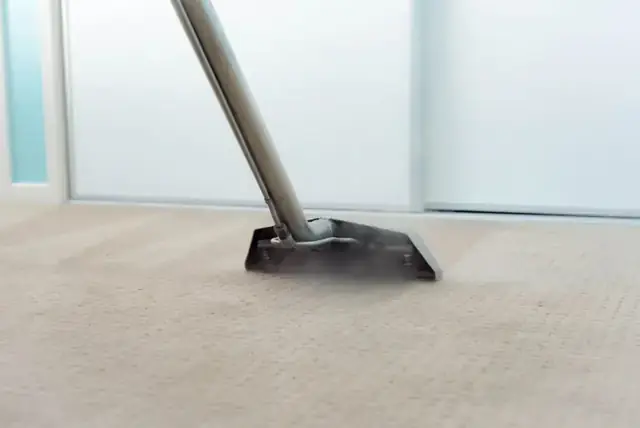
What justifies bringing equipment is depth. Odor from a spill lives at the base of the fiber, in the backing, and in the pad — the parts a vacuum and a surface spray never reach. Hot water extraction pulls residue out of that layer, which is the difference between removing a smell and covering it. The IICRC, which sets the standards our trade works to, treats removing the source rather than masking it as the entire point of odor work — and that is the right way to judge any quote you are given, including ours.
We are licensed and insured, based in Northbrook, and every job carries our satisfaction guarantee. That guarantee is exactly why we push people through the free steps first: we would rather you keep the money now and call in November when it is actually warranted. If you are not sure which category your smell falls into, run the 48-hour test and then call us with what happened at each stage — we can usually tell you on the phone whether it is a job for us or for an HVAC tech. If you would rather just see a number for a whole-house clean without talking to anyone, the cleaning cost calculator will give you one.
FAQ: The First-Heat Smell
Why does my house smell when I turn the heat on for the first time?
Most first-heat smells are dust burning off the furnace heat exchanger after months of sitting idle. It smells hot, dusty, or slightly singed, it is strongest in the first hour, and it should fade the same day. If the smell is musty or sour instead, and it gets stronger every time the heat cycles, it is not burn-off. Warm moving air is re-releasing odor from something in the house, most often carpet, padding, or upholstery.
How long should the burning dust smell last?
A few hours of normal running, and it should be gone within about a day. Crack a window and let the system run through full cycles rather than switching it on and off. A burning smell that is still there on day two, or that smells acrid, plastic, or electrical, is not dust. Shut the system down and have an HVAC technician look at it.
Will duct cleaning get rid of the smell?
Often not. The EPA does not recommend duct cleaning as routine maintenance and points to specific triggers instead, such as visible mold growth in the ducts, vermin, or ducts clogged with debris that is being released into the room. Ducts are smooth pipes with very little surface area compared with the carpet, pad, and upholstery in the same house. If the odor source is in those soft surfaces, cleaning the ducts leaves it in place and the smell returns on the next heating cycle.
Why does old pet urine smell worse when the heat is on?
Dried urine leaves salts in the carpet backing and pad that pull moisture out of the air, and warmth speeds up the release of the odor compounds. That is why a spot you could not smell in August becomes obvious in October without anything new having happened. Masking sprays and carpet powders do not reach it. The urine has to be located and the affected area treated with an enzyme product all the way down to the depth it originally soaked.
How much does professional carpet and odor cleaning cost?
My Carpet Cleaning charges $100 for one area (up to 300 sq ft), $180 for two areas, and $50 for each additional area, with a $180 appointment minimum ($220 inside Chicago), and estimates are free. Upholstery cleaning is $130 for a sofa, $100 for a loveseat and $40 for a chair, and area rugs are $1.50 per square foot cleaned in-home or from $3 per square foot hand-washed at our plant with free pickup and delivery. Pet odor work is quoted after we locate the affected area, because the price depends on how far the urine spread rather than on the size of the room. We are based in Northbrook and serve Chicago and the surrounding suburbs, and you can see our full Northbrook carpet cleaning coverage on our service page.