Key Takeaways
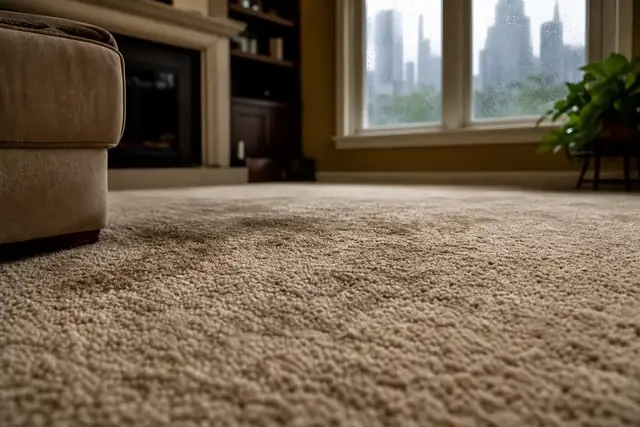
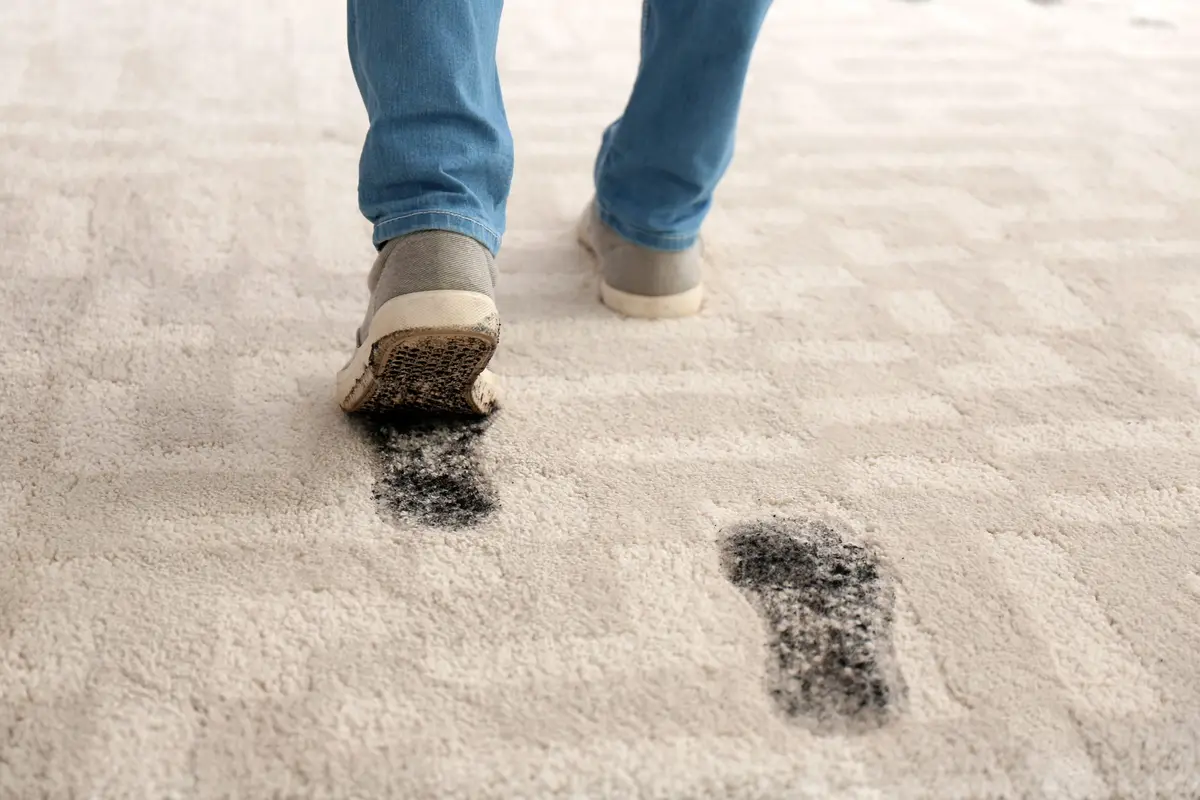
- Rock salt and ice melt come in on boots as slush, dry into a white crust, and leave the fibers stiff, dull and gritty. By February the front hall of most Chicago homes has a pale, crunchy lane from the door to the stairs.
- Dry salt is abrasive. Every step on a salted lane grinds crystals against the pile, and that wear does not come back with cleaning.
- Salt attracts moisture, so a salted entry carpet never quite dries in winter, re-soils faster and starts to smell.
- White marks that return after spot cleaning are residue that was dissolved and left behind. Water moves salt; it does not remove it.
- Truck-mounted hot water extraction rinses salts out. The time to book is late winter or early spring, once the last salt is tracked in.
- Carpet protector is $15 per area and slows the re-soiling that salt accelerates.
What Tracked-In Salt Does to Carpet
Chicago salts its streets and sidewalks from the first November freeze to the last March thaw, and the suburbs add ice melt on every driveway and front walk. It comes home on boot soles, stroller wheels and the dog's paws. Here is what it does once it is in the carpet.
The white crusty residue
Slush carries dissolved salt into the pile. The water evaporates and the salt stays, as a white or gray crust on the fiber tips and a fine powder at the base. On a dark carpet it shows as a pale, chalky lane; on a light carpet it shows as a gray one, because the crust holds onto soil. It is most obvious in the first few feet inside the door and on the bottom stairs.
Stiff fibers
Salt crystals coat the fibers and lock them together, so a salted lane feels stiff and crunchy instead of soft. The softness comes back when the salt is rinsed out.
Abrasion of the pile
Dry salt crystals are hard and sharp-edged. In carpet they behave like sand: every footstep grinds them against the fibers, and over a winter that dulls the pile and frays the tips. This is the one part of the damage cleaning does not reverse. Rinsing out the salt stops the grinding; it does not restore fiber that has already been scuffed.
It attracts moisture and re-soiling
Salt pulls moisture from the air and holds it, so a salted entry carpet stays slightly damp through the winter. Damp pile grabs soil and holds it, which is why the entry lane goes gray so fast, and damp pile in a closed-up winter house is where a musty smell starts.
Why the White Marks Come Back After Spot Cleaning
The usual home fix is a damp cloth or a spray bottle, and it works for about a day. Water dissolves the salt, the cloth spreads it into a wider circle, the carpet dries, and the salt crystallizes again in a ring that is larger and fainter than the first. Nothing was removed; it was rearranged.
The fix at home is the one we give for any spill: blot white salt rings with cool water as soon as you see them, blot again with a dry towel, and let a fan dry the spot. Repeat two or three times; each pass takes some salt out in the towel rather than leaving it in the carpet. Do not scrub, do not use hot water, and do not add product. What neither reaches is the salt that went down into the backing and pad, and that is where the rest of it waits until spring.
Entry Mats and a Winter Vacuuming Routine
Most tracked-in soil, including winter salt, arrives on soles, so the cheapest defense is to stop it at the door. A rough mat outside to scrape slush off and an absorbent mat inside to take the rest cut the salt that reaches the carpet more than any product can. The inside mat should be long enough for both feet to land on it twice. A boot tray and a shoes-off rule end the rest of the problem. Shake the mats outside and wash them when they stiffen; a mat full of salt is a salt dispenser.
Then vacuum the entry every other day through the winter, slowly, in two directions. Dry salt is a powder, and a vacuum removes it like any grit, as long as it is picked up before the next wet boot dissolves it back into the pile. Run the crevice tool along the baseboard and the edge of the bottom stair, where filtration soil and salt collect together. Our year-round carpet maintenance schedule puts the winter routine in context.
How Professional Hot Water Extraction Rinses Salt Out
Salt dissolves in water, which makes it one of the easier things we take out of a carpet, provided the water that dissolves it is then removed instead of left to dry. That is what truck-mounted carpet cleaning does. The entry lane gets a pre-spray, Powdered Formula 90 on heavy traffic soil, which loosens the oily film that salt and soil have bonded into. Then hot water is rinsed through the pile under pressure and pulled straight back out with a vacuum strong enough to recover it from the backing. The dissolved salt leaves in the waste tank. The rinse, All Fiber Rinse, is neutral and leaves the fibers soft and residue-free, which matters on a lane that has been stiff since December.
Matted entry lanes get the $50 CRB deep-clean upgrade, a counter-rotating brush that works the pile from both sides, lifts embedded grit to the surface and stands the crushed pile back up. Dark filtration-soil lines along the baseboards are $20 per area. The carpet is dry in 2 to 4 hours with air movers, up to 6 on heavy soil, and in an entry hall in January, with the furnace running, it is usually at the fast end.
An entry hall or a carpeted vestibule is one area, and stairs are counted per step. Here is the typical winter job, a front hall and one flight of 13 stairs, with and without the living room:
| Line item | Math | Price |
|---|---|---|
| Entry hall (1 area) | $100 | $100.00 |
| 13 carpeted stairs | 13 × $4.80 | $62.40 |
| Hall and stairs, billed at the minimum | $162.40 is under the minimum | $180.00 ($220 in Chicago ZIP codes) |
| Hall, living room and stairs | $180 + $62.40 | $242.40 |
Two areas are $180 and each additional area is $50, so adding the living room costs little more than the hall alone. Every rate is on the pricing page, and the calculator applies the right minimum from your ZIP code.
Protector After Cleaning, and the Right Time to Book
Carpet protector is a clear, stain-resist coating applied right after extraction, $15 per area. It bonds to clean fiber and makes it repel liquid, so slush beads on the surface for a moment instead of wicking in, and it slows re-soiling, so the entry lane takes longer to gray out. It adds no dry time. Hallways, stairs and family rooms wear through protector first, and they are where reapplying pays off most, which makes the entry the one area where we would spend the $15 before any other. Protector is not a stain guarantee and does not make carpet waterproof; a boot full of slush left on the carpet will still soak in.
On timing, Chicago has two natural deep-clean windows: early spring, once the last salt is tracked in, and mid-fall, before the holidays. For a salted entry, spring is the one that matters. Book the cleaning once the last salt is tracked in; it pulls out the de-icer residue and grit before they dull the fibers. A January cleaning helps a carpet that is already crunchy, but the salt starts coming back the next morning; in March and April the rinse stays clean. The other sound approach is a fall cleaning with protector, so the carpet goes into winter protected and gets its rinse in spring. Same-week appointments, same-day when available.
Building Entrances and Lobbies
Everything above happens faster in a building. A condo lobby, an office entrance or a storefront takes hundreds of salted boots a day, and corridors and entrances gray out fast. For those floors the schedule is the fix: regular low-moisture encapsulation keeps traffic lanes looking consistent between deep cleans, and it is dry in about an hour, so the entrance does not close. Then a periodic hot water extraction, ideally in spring, rinses out what the winter left behind. Long walk-off mats at every door, changed when they stiffen, do more for a lobby carpet than any product. Our commercial carpet cleaning service sets that schedule with you; commercial pricing depends on square footage, carpet type, soiling and how often we visit, confirmed after a walkthrough.
IICRC-certified technicians, family-owned since 1998, 4.9 stars from 300+ Google reviews. Not happy? Call us within 7 days and we will re-clean the area or refund your payment. Chicago (773) 997-1807, Northbrook (847) 994-1171, Bloomingdale (630) 822-7155, Clarendon Hills (630) 822-7133.
FAQ: Salt and Winter Carpet
Does road salt permanently damage carpet?
The residue does not; it rinses out with hot water extraction, and the stiffness goes with it. The abrasion can: dry salt crystals grind against the pile with every step, and over a winter that dulls and frays the fibers in the entry lane. Vacuuming the entry every other day and cleaning once the last salt is tracked in keep that wear to a minimum.
How do I get white salt stains out of carpet myself?
Blot with cool water and a clean white towel, blot dry, and let a fan finish the spot. Repeat two or three times; each pass takes some salt out in the towel. Do not scrub, do not use hot water and do not add a foaming cleaner. If the ring comes back, the salt is in the backing and pad and needs extraction.
Should I clean carpets in winter or wait until spring?
Either works, but spring stays clean. Cleaning in January takes the crust out of a carpet that is already crunchy, and the salt starts coming back the next morning. Booking once the last salt is tracked in means the rinse pulls out the whole winter at once. A fall cleaning with protector is the other sound approach.
Does carpet protector help with salt?
It helps with the two things salt makes worse. Protected fibers repel liquid, so slush beads on the surface for a moment instead of wicking in, and they release dry soil to the vacuum more easily, so the entry lane grays out slower. It is not a stain guarantee. Protector is $15 per area, applied right after cleaning.
Does salt damage area rugs too?
Yes, and faster, because an entry rug takes the first and wettest step. A synthetic entry rug can be cleaned in your home at $1.50 per sq ft. A wool rug by the front door does better with a full wash at our plant, from $5 per sq ft, which dusts the grit out of the foundation before the rug is washed.
What does it cost to clean a salted entry hall and stairs?
An entry hall is one area, $100 on the schedule, and stairs are $4.80 per step, so a hall with 13 stairs is $162.40, billed at the $180 appointment minimum ($220 inside Chicago ZIP codes). Adding the living room makes two areas at $180 plus the stairs, $242.40. Protector is $15 per area.